Every legacy application eventually reaches a point where the problem isn’t the code you wrote — it’s the stack you wrote it on. The framework goes out of support. The runtime stops getting security patches. The people who can maintain it retire or move on, and the ones who remain cost a fortune. Integration with modern cloud, data, and AI services becomes a project in itself. At that point, the stack itself is the risk, and the question stops being whether to move and becomes how to move, for this specific technology.
This is a playbook for exactly that. It covers the four legacy stacks we’re asked about most — .NET, Java, COBOL, and PHP — the signals that each has reached its limit, and the path forward for each. It’s deliberately practical: not a generic “modernize everything” pep talk, but a stack-by-stack map, built on one principle that applies to all of them — you migrate incrementally, not in a big-bang rewrite.
First: Is It Actually Time to Move?
Before the how, a quick gut check on the whether. A stack needs a path forward when it’s out of vendor support, hard or expensive to staff, exposed on security and compliance, or unable to integrate with the tools the business now depends on — and when your team is building workarounds instead of building features. If you want the full diagnostic, our 7 signs it’s time to modernize your business software is the assessment companion to this playbook. If three or more of those signs are true for a system, the rest of this guide is for you.
The Stacks at a Glance
Each legacy stack has its own tell-tale signals and its own destination. Here’s the map before the detail.
| Legacy stack | Typical signals | Path forward | Kanetic-X accelerator |
|---|---|---|---|
| .NET family Framework 4.x, VB6, Classic ASP, Web Forms, Xamarin | Out-of-support frameworks; Web Forms; Xamarin end-of-life | Modern .NET; .NET MAUI for mobile | .NET & Xamarin/MAUI |
| Java EE / J2EE WebSphere, JBoss | Heavy app servers; slow release cycles; licensing cost | Modern, cloud-native Java & microservices | Java migration |
| COBOL & Mainframe CICS, DB2, JCL | Scarce COBOL skills; high MIPS cost; batch rigidity | Modern, cloud-hosted, maintainable platforms | Mainframe modernization |
| Legacy PHP Monolithic / unframeworked | Old PHP versions; no framework; security exposure | Modern framework-based, secure PHP or re-platform | PHP modernization |
All four paths are driven by Kanetic-X, our Modernization Accelerators — each an AI-driven framework built for one stack, so the migration follows a proven pattern instead of being reinvented from scratch every time.
.NET Family: Framework, VB6, Classic ASP, and Xamarin
The .NET family is the most common migration we run, because “legacy .NET” covers so much ground: .NET Framework 4.x, VB6, VB.NET, Classic ASP, WCF, and Web Forms on the server side, and Xamarin on mobile. These aren’t broken — they’re stranded on platforms Microsoft has moved past, which means shrinking support, security exposure, and a widening gap from modern .NET’s performance and cloud-native tooling.
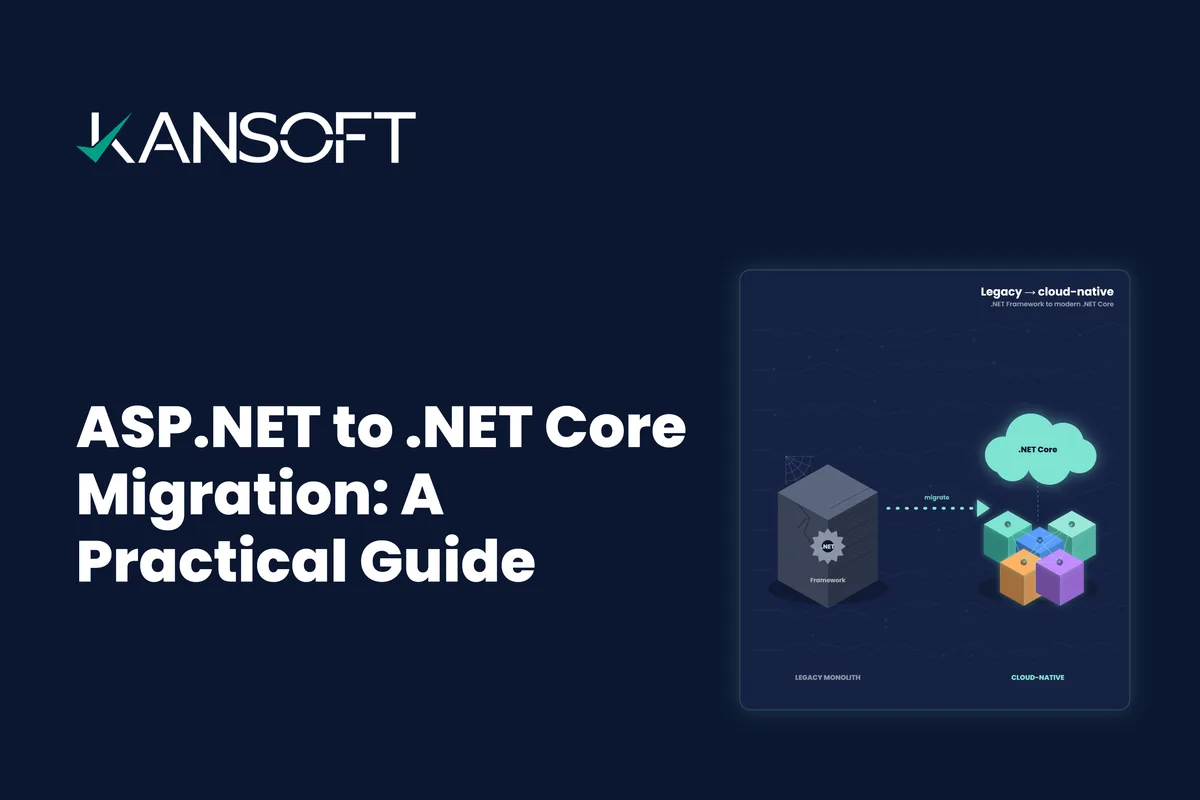
The path forward is modern .NET for server and web workloads, and .NET MAUI for Xamarin mobile apps — MAUI is the direct successor to Xamarin, consolidating multiple platform projects into a single codebase with better performance and hot-reload productivity. Business logic is preserved; the platform underneath it is replaced. Our .NET modernization accelerator covers the server-side family, and the Xamarin-to-MAUI accelerator handles mobile. For the deeper end-to-end .NET path, we’ve written a dedicated .NET migration guide, and because Classic ASP is a different problem than ASP.NET, a separate Classic ASP to ASP.NET Core migration guide.
This is where we can point to proof rather than promises.
Read the Xamarin → .NET MAUI case study
See how we migrated three enterprise Xamarin apps to .NET MAUI for Wonder Cement in under four weeks — a real, low-disruption stack migration, not a rewrite.
Java EE / J2EE: Off the Heavy App Servers
Legacy Java EE / J2EE applications — typically running on WebSphere or JBoss — tend to carry three burdens: heavyweight application servers that are costly to license and operate, slow release cycles baked into the architecture, and a design that predates cloud-native patterns. The Java itself is often sound; the platform around it is the constraint.
The path forward is modernization toward modern, cloud-native Java — lighter runtimes, containerization, and, where the domain warrants it, decomposition into microservices so capabilities can scale and deploy independently. The move is incremental: you don’t rip out the app server overnight, you strangle functionality out of it one bounded capability at a time. Our Java migration accelerator is built for exactly this transition — and it’s one of the stacks that, until now, had no dedicated guidance despite being one of the most common enterprise legacy estates.
COBOL & Mainframe: The Highest-Stakes Move
COBOL and the broader mainframe estate — CICS, DB2, JCL, and batch workloads — represent the highest-stakes migration of the four, and often the most valuable. These systems typically run core business processes, but they carry compounding risk: the COBOL skills market is shrinking every year, mainframe operating costs are high, and the batch-oriented rigidity makes it hard to deliver the real-time, integrated experiences the business now needs.
The path forward is a carefully sequenced move to modern, maintainable, cloud-hosted platforms — never a big-bang cutover, because the blast radius on a core mainframe system is the whole business. The discipline here is maximum incrementalism: understand the domain, extract capabilities behind a facade, migrate data deliberately, and prove each step before the next. Our mainframe modernization accelerator is designed for this risk profile — another stack that had zero blog support until this playbook, despite being one of the most consequential modernization decisions an enterprise makes.
Legacy PHP: From Monolith to Maintainable
Monolithic or unframeworked legacy PHP applications are extremely common in the mid-market — often built years ago, running on old PHP versions, with security exposure and a structure that resists change. They frequently power revenue-generating web applications, which raises the stakes on doing the migration without downtime.
The path forward is re-architecting toward modern, framework-based, secure PHP, or re-platforming entirely where the application warrants it — with the same incremental discipline: modernize behind a routing layer, capability by capability, so the live application keeps serving traffic throughout. Our PHP modernization accelerator drives this path — the third of the previously-unsupported stacks this playbook now covers.
The One Method Behind All Four
Notice what every path above has in common: incremental migration, never a big-bang rewrite. The stacks differ, but the operating system is identical. You put a routing facade in front of the legacy system, extract or replatform one capability at a time, migrate data deliberately, and redirect traffic as each modernized piece goes live — so the old system keeps running while the new one grows around it and the blast radius of every change stays small.
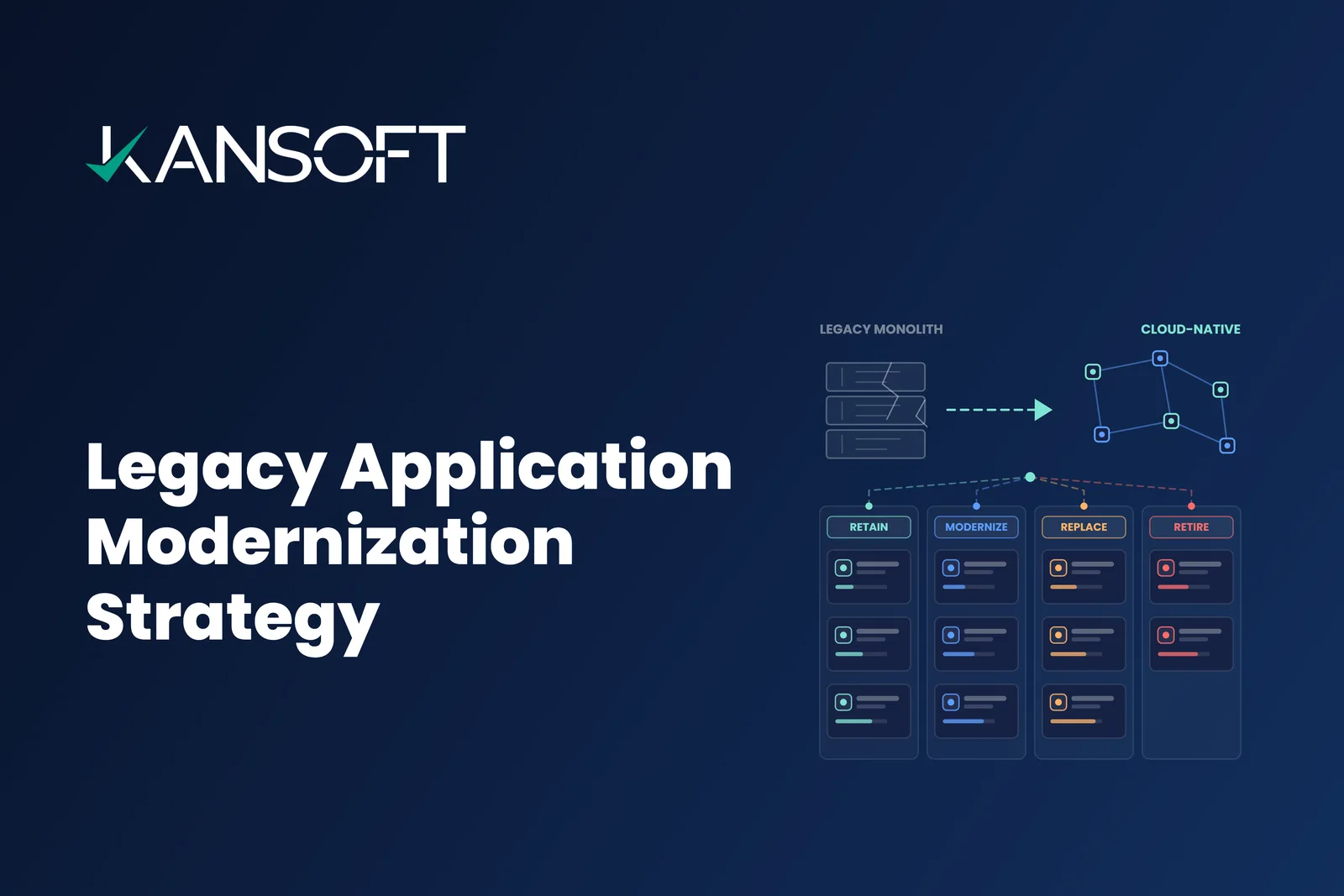
That’s the strangler fig pattern, and it’s why a migration doesn’t have to mean an 18-month freeze — we cover the mechanics in how we decompose monoliths without the rewrite risk. It also depends on getting the up-front decision right: what to modernize, replace, or retire, and which of the six modernization approaches fits each application — the subject of our legacy application modernization strategy guide. Two companions worth having open alongside this playbook: legacy front ends (AngularJS, jQuery) have their own frontend migration accelerator, and the on-prem databases underneath these apps have a database migration accelerator.
Why the Stack-Specific Approach Wins
Generic modernization advice fails legacy migrations because the hard parts are stack-specific: VB6’s quirks are nothing like COBOL’s batch model, and a Java EE app server migration shares little with a PHP monolith refactor. Treating them the same produces either paralysis or a risky rewrite. The accelerator model works because each Kanetic-X framework encodes the proven pattern for its stack — assessment, AI-assisted transformation, and validation — so the migration is a repeatable engineering program with a known shape, not a bespoke gamble. That’s how three enterprise apps move in under four weeks instead of stalling for a year.
Have a .NET, Java, COBOL, or PHP system that needs a path forward?
Tell us your stack and its constraints. We'll map the target, pick the right Kanetic-X accelerator, and sequence an incremental migration that keeps the business running throughout.