Most cloud journeys start with excitement. A migration roadmap is approved, teams begin moving workloads to AWS or Azure, and the promise of scalability, agility, and innovation feels closer than ever.
But somewhere along the way, many organizations hit a different reality.
Cloud environments become difficult to manage. Infrastructure changes happen in silos. Teams build systems faster than they can standardize them. Security and governance start becoming reactive rather than designed. Costs begin rising, not because the cloud is expensive, but because the cloud without control always is.
This is exactly why Infrastructure as Code with Terraform has emerged as one of the most important foundations of modern cloud operations.
Among all Infrastructure as Code tools, Terraform Infrastructure as Code has become the most trusted approach for organizations that want scalable, governed, and predictable cloud environments.
Cloud Infrastructure Was Never Meant to Be Built Manually
In the early days of cloud adoption, provisioning was simple. A virtual machine here, a storage bucket there, a firewall rule added when needed.
But as organizations scale, cloud infrastructure stops being a one-time setup. It becomes a living system that changes continuously.
New environments are spun up for testing. Applications expand across regions. Kubernetes clusters are introduced. Identity policies evolve. Teams grow. Vendors change. Compliance requirements become stricter.
At this stage, managing infrastructure through portals, manual scripts, or fragmented configurations becomes a serious operational risk.
Cloud infrastructure automation addresses this challenge by ensuring that infrastructure is created, modified, and governed through repeatable, version-controlled processes rather than manual effort.
What Infrastructure as Code Actually Means
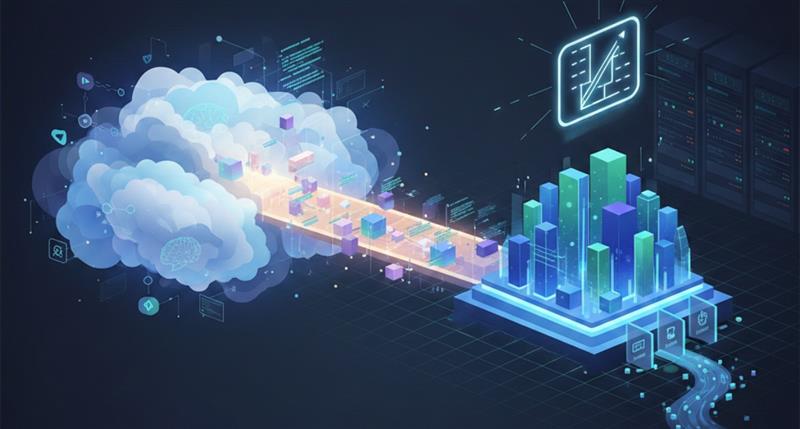
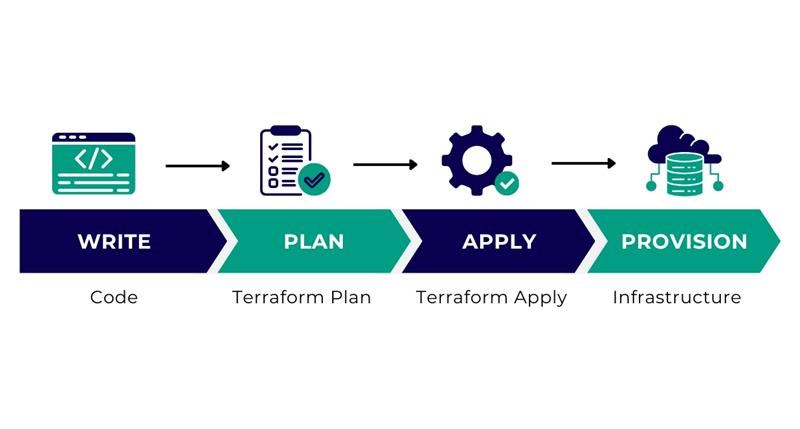
Infrastructure as Code is not simply about writing configuration files. It is a disciplined approach to designing, provisioning, and managing infrastructure through code that can be versioned, reviewed, tested, and audited.
Instead of infrastructure existing in individual cloud consoles or undocumented scripts, it becomes a shared, structured asset.
This approach allows organizations to apply Infrastructure as Code best practices, such as consistency across environments, automated validation, and traceable changes.
Infrastructure is no longer created based on memory or tribal knowledge. It is created by design.
Why Terraform Has Become the Global Standard for Infrastructure as Code

Terraform’s strength lies not just in provisioning infrastructure, but in enabling long-term control and scalability.
Modern enterprises rarely operate in a single cloud environment. Most organizations today run workloads across AWS, Azure, Google Cloud, Kubernetes, and SaaS platforms.
Terraform Infrastructure as Code provides a single, declarative framework to manage this complexity.
Through Terraform automation, infrastructure definitions become reusable and predictable. Development, staging, and production environments follow the same patterns. Security policies are embedded into templates instead of applied manually. Scaling becomes structured rather than reactive.
Terraform also introduces governance into cloud operations. Infrastructure changes can be reviewed before deployment. Drift can be detected. Audit trails are automatically created. Compliance becomes easier to maintain.
In this way, Infrastructure as Code with Terraform evolves from a technical tool into an operating model for cloud maturity.
The Real Business Problem Terraform Solves
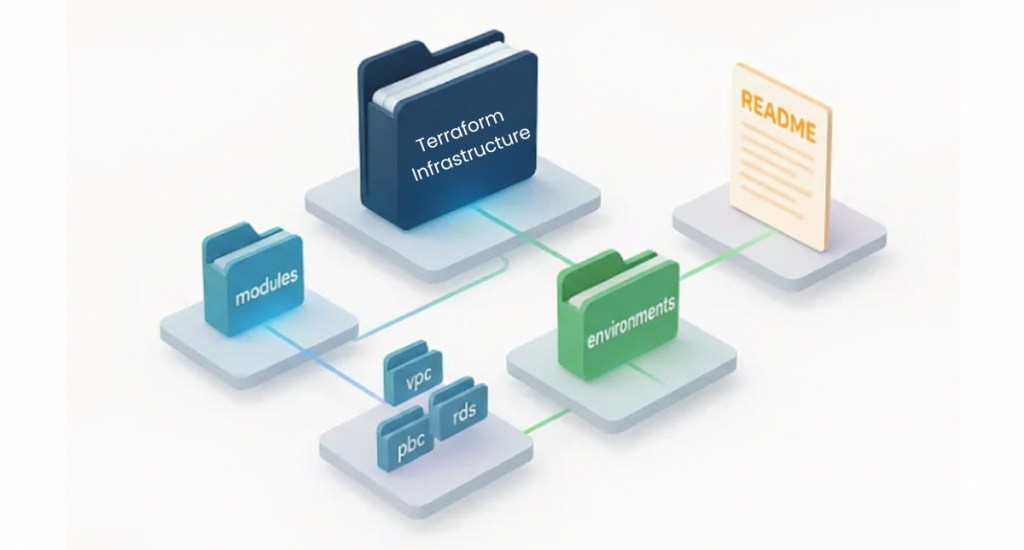
Organizations do not adopt Terraform simply because it is modern. They adopt it because unmanaged cloud growth creates cost, risk, and operational friction.
Without Terraform automation, teams often face:
- Environments that drift from one another, causing instability
- Inconsistent security policies across teams and regions
- Rapid provisioning without governance or visibility
- Rising cloud costs driven by unmanaged resources
By adopting Infrastructure as Code best practices, organizations establish a single source of truth for infrastructure. Cloud environments become reproducible, auditable, and continuously improvable.
Who Benefits Most from Infrastructure as Code with Terraform?
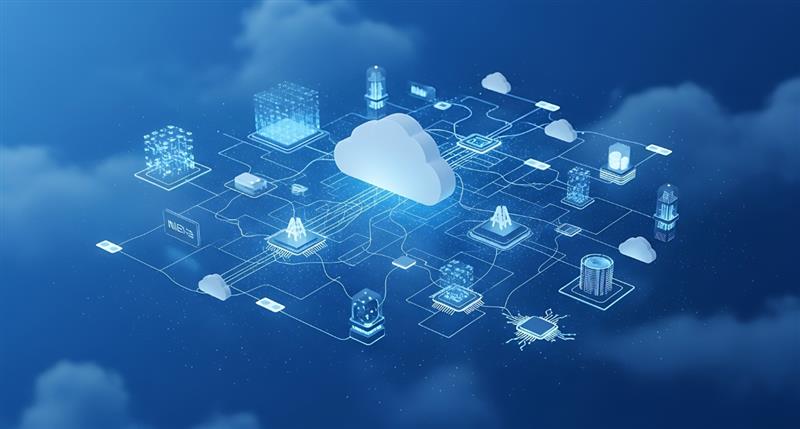
The impact of Infrastructure as Code with Terraform is highest when the cloud becomes a core business platform rather than an experiment.
This includes:
- Product companies scaling across regions that need consistent infrastructure foundations
- Enterprises modernizing legacy systems that require structured cloud adoption
- Organizations managing multiple teams and environments that need governance and repeatability
- Regulated industries such as healthcare and finance that demand traceability and compliance
- Global delivery organizations that need rapid, standardized environment provisioning
In these scenarios, Terraform Infrastructure as Code supports not just DevOps efficiency, but overall business resilience.
Infrastructure as Code as a Core Pillar of Kansoft’s Cloud Services
At Kansoft, we view Infrastructure as Code not as an add-on, but as a foundational capability that enables reliable and scalable cloud transformation.
Cloud modernization efforts often stall when infrastructure remains manually managed or inconsistently designed. That is why our approach to Infrastructure as Code consulting focuses on building cloud environments that are automated, governed, and ready to scale as business needs evolve.
Through our Terraform consulting services, we help organizations move from ad-hoc cloud setups to structured, repeatable infrastructure foundations. Our teams design and implement Terraform frameworks that standardize how networking, compute, storage, identity, Kubernetes, and security policies are provisioned across environments.
As part of our Terraform implementation services, we work closely with engineering and platform teams to ensure development, staging, and production environments remain consistent and predictable. This reduces configuration drift, improves deployment reliability, and accelerates onboarding for new teams.
Our broader cloud DevOps consulting capabilities ensure that Infrastructure as Code integrates seamlessly into existing delivery workflows. We embed Terraform into CI/CD pipelines so infrastructure changes follow the same governance, review, and automation processes as application code.
We also support organizations with cloud automation services that improve visibility and operational control. By enforcing tagging standards, policy-as-code, and automated guardrails, we help teams gain clarity into cloud usage, security posture, and cost management.
The outcome is not just automated infrastructure, but a cloud foundation that supports long-term growth — where infrastructure scales with the business, remains compliant by design, and enables teams to move faster with confidence.
Terraform is Not About Automation. It’s About Confidence.
The most valuable outcome of cloud infrastructure automation is not speed alone.
It is confidence.
- Confidence that environments can be recreated reliably.
- Confidence that scaling will not introduce instability.
- Confidence that security controls are consistent.
- Confidence that cloud investments are governed and sustainable.
By following Infrastructure as Code best practices and adopting structured Terraform automation, organizations turn infrastructure into a strategic asset instead of a hidden risk.
That is why Terraform has become a foundational pillar of modern cloud strategy.