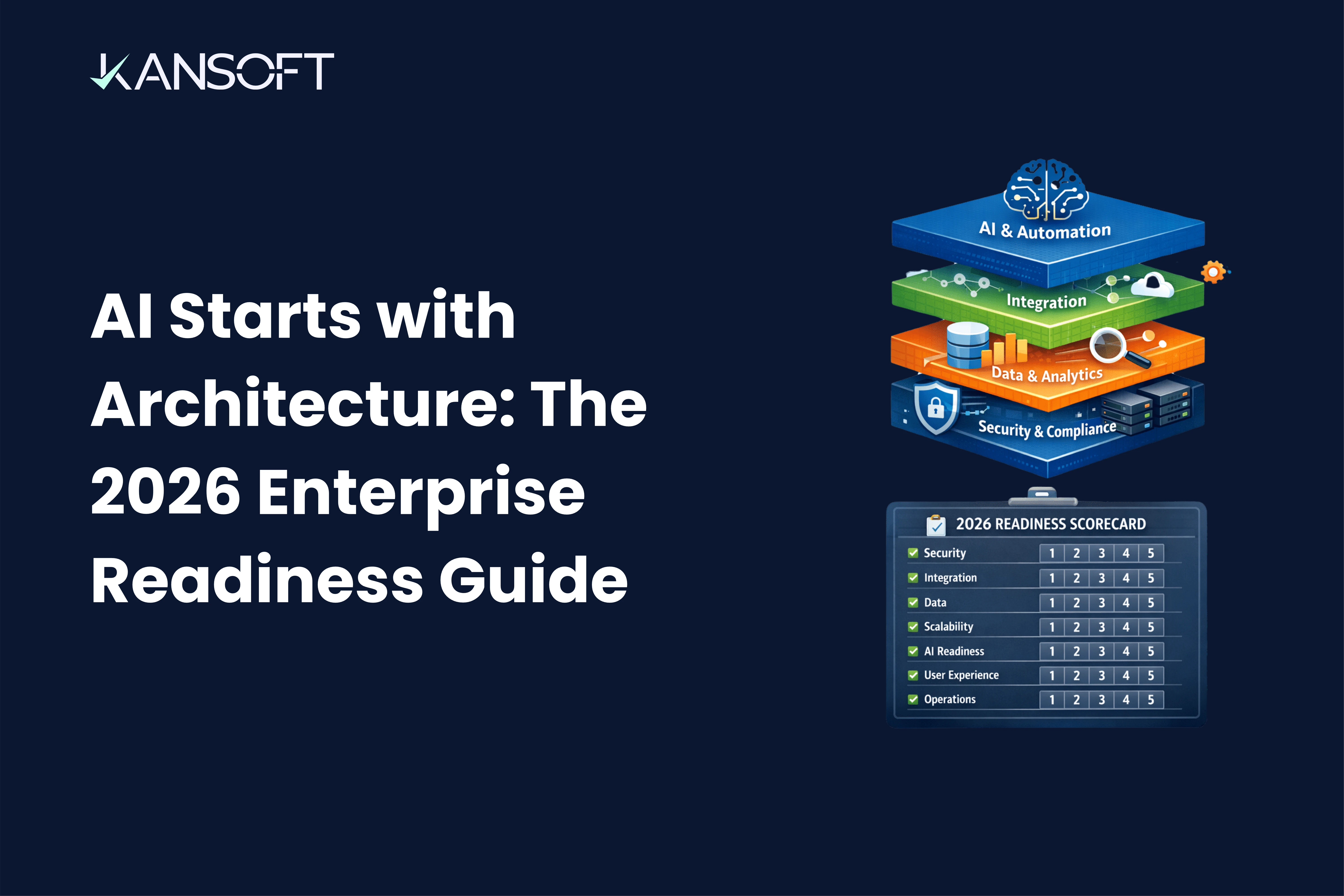
Across industries, enterprise cloud architecture transformation has entered a decisive new phase. Organizations are no longer modernizing technology environments simply to improve operational efficiency; they are redesigning their digital foundations to enable data-driven decision making, AI-powered operations, and globally scalable platforms.
Industry indicators highlight the scale of this shift. Research shows that nearly 90% of organizations are expected to operate hybrid cloud environments within the next few years, reflecting the growing complexity of integrating legacy systems, distributed workloads, and AI-driven infrastructure requirements.
At the same time, enterprise investment in cloud infrastructure continues to expand rapidly as organizations prepare for AI-intensive workloads, real-time analytics, and distributed data platforms. These trends indicate that cloud adoption alone is no longer sufficient; the competitive differentiator increasingly lies in how effectively enterprises architect cloud environments for intelligence, scalability, and governance.
Over the past decade, many enterprises have accelerated migration initiatives to move applications and infrastructure into the cloud. While these efforts improved accessibility and scalability, many environments were built primarily to host traditional enterprise systems. Today, organizations require structured enterprise digital transformation consulting, cloud app modernization services, and legacy system modernization services to redesign infrastructure for AI, real-time analytics, and integrated enterprise platforms.
This shift is particularly visible in sectors such as healthcare, manufacturing, and technology-driven enterprises, where regulatory compliance, data governance, interoperability, and operational scalability must coexist within highly complex technology landscapes. Organizations often manage fragmented hybrid environments, integrate legacy platforms with modern applications, and attempt to scale AI initiatives on infrastructure never designed for high-volume data workloads. As transformation programs expand, these architectural limitations frequently surface as rising cloud costs, integration bottlenecks, inconsistent governance, and slower innovation cycles.
Consequently, enterprise leaders are redefining modernization strategies around cloud architecture assessment and engineering-led architecture design, building unified, governance-driven, AI-ready cloud foundations that sustain long-term transformation programs.
Why Many Enterprise Cloud Transformations Underperform
Enterprise cloud adoption has expanded rapidly, yet many transformation programs continue to fall short of expected outcomes. While infrastructure scalability has improved, organizations frequently encounter persistent challenges related to cost management, fragmented environments, delayed modernization timelines, and limited readiness for advanced analytics workloads. “Organizations waste an estimated 27–32% of their cloud spend due to a lack of governance and workload optimization.”
Migration-first strategies remain a major contributor. Organizations often relocate workloads to the cloud without first establishing enterprise architecture frameworks or implementing structured hybrid cloud integration services to align legacy and modern platforms. This results in fragmented environments, duplicated pipelines, and inconsistent governance.
Legacy integration complexity further compounds the challenge. Many enterprises operate mission-critical applications built on outdated architectures that require legacy software modernization services and cloud microservices, and application modernization approaches to ensure interoperability. Without API-driven integration and event-driven architecture layers, modern cloud platforms often coexist with legacy systems rather than functioning as unified ecosystems.
Governance and cost management architecture also play a decisive role. As infrastructure expands across business units, decentralized provisioning patterns often emerge. Without centralized governance frameworks and workload-aligned operating models, enterprises may experience resource sprawl and limited cost transparency—challenges that structured cloud operating model consulting initiatives are designed to address.
Where Cloud Transformations Fail Most Often
- Migration executed without an enterprise architecture design
- AI initiatives launched without modernized data platforms
- Fragmented hybrid governance across business units
- Cost optimization is addressed only after infrastructure scale
Where does your enterprise cloud architecture stand today?
Download Enterprise Cloud Architecture Readiness Framework
The Shift Toward AI-Driven Enterprise Infrastructure
AI adoption is transforming infrastructure requirements. Modern workloads depend on scalable compute orchestration, lifecycle-managed model deployment environments, and unified enterprise data platforms. “More than 60% of enterprise AI initiatives are delayed due to data platform and infrastructure readiness challenges.” Enterprises are transitioning toward lakehouse architectures, event-driven integration layers, containerized compute orchestration, and microservices-based application environments that enable real-time analytics and enterprise-scale machine learning operations.
Regulatory-driven governance is also becoming a primary architecture design factor across European and global enterprises, influencing data residency strategies, lifecycle governance, and cross-border platform integration models. In highly regulated sectors, infrastructure must balance innovation and scalability with compliance readiness, often requiring modernization strategies combining public cloud, hybrid platforms, and private cloud environments, where private cloud is highly scalable when architected for workload-aligned operations.
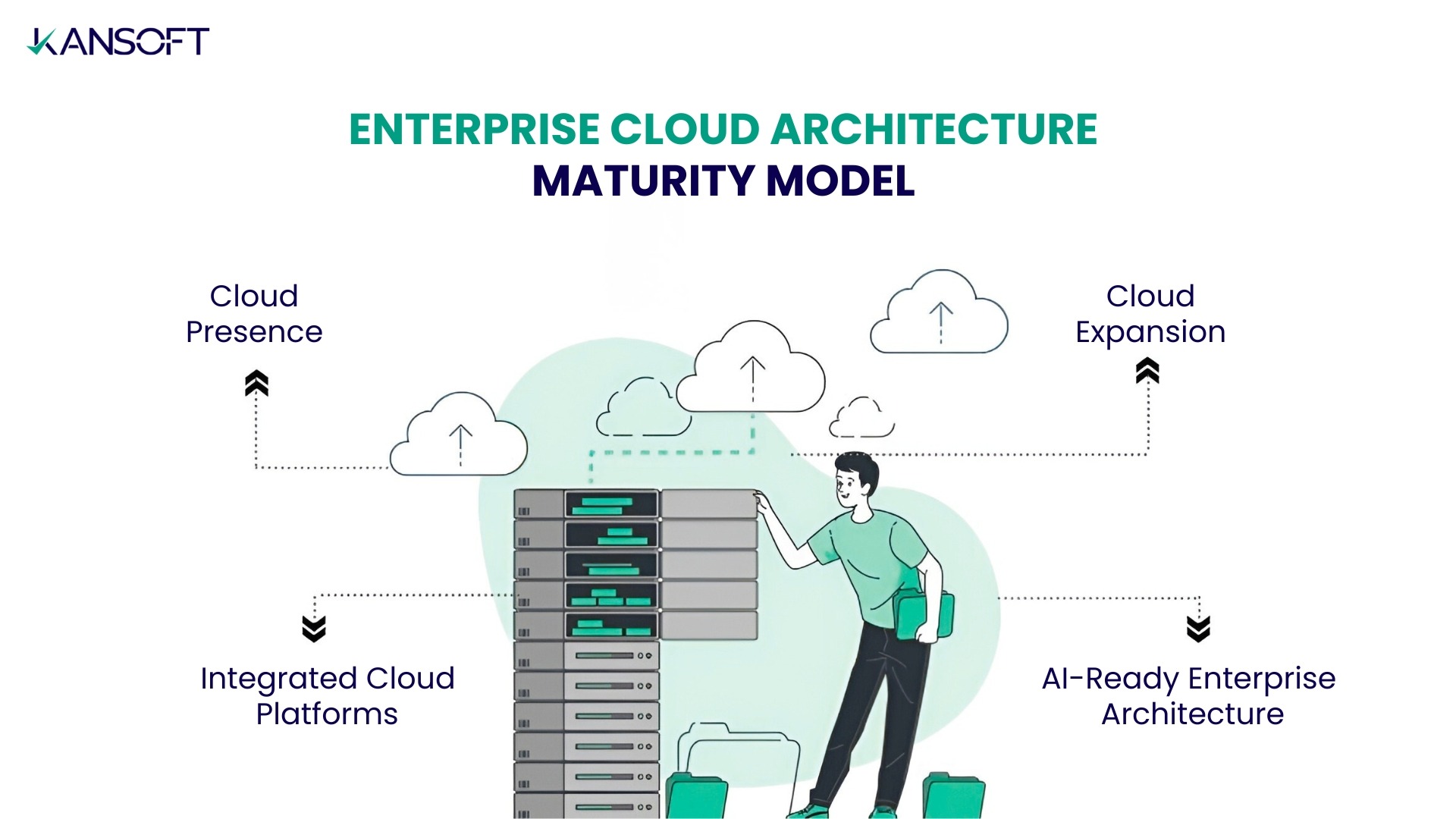
Enterprise Cloud Architecture Maturity Model
Enterprise cloud maturity typically progresses across four stages:
- Cloud Presence — isolated workloads
- Cloud Expansion — multi-platform adoption without alignment
- Integrated Cloud Platforms — unified governance and integration layers
- AI-Ready Enterprise Architecture — scalable intelligence ecosystem
Evaluating maturity through a structured cloud architecture assessment enables organizations to identify modernization priorities and transformation risk areas early in the journey.
Core Pillars of AI-Ready Cloud Foundations
Data Platform Modernization enables enterprise-wide analytics and AI through unified integration pipelines and governed data platforms.
Application and Platform Modernization focuses on cloud app modernization services, legacy system modernization services, and microservices transformation strategies that improve scalability, integration, and deployment agility.
Hybrid and Multi-Cloud Integration requires structured hybrid cloud integration services that orchestrate workloads across environments while maintaining governance and performance consistency.
Engineering-Driven Cloud Optimization introduces workload-aligned infrastructure design, automated governance enforcement, and continuous cost optimization practices that maintain performance while controlling infrastructure expenditure.
Organizations achieving architecture readiness typically realize faster modernization program velocity, improved enterprise data accessibility, reduced infrastructure redundancy, and more predictable transformation cost models.
Map your organization’s maturity stage and identify modernization priorities
Download Enterprise Cloud Architecture Readiness Framework
Industry Transformation Scenarios
Global enterprises modernizing legacy systems through cloud-native architectures have demonstrated measurable operational gains. In several transformation initiatives built on Azure cloud infrastructure, organizations migrating monolithic applications to microservices-based environments achieved improved scalability, faster deployment cycles, and significant reductions in infrastructure provisioning time. These initiatives highlight how architecture-led modernization, combining legacy application refactoring, hybrid integration, and cloud-native platform engineering, enables enterprises to accelerate digital transformation while maintaining operational continuity.
Similar architecture-led modernization approaches can be adapted across healthcare, manufacturing, and enterprise technology environments, depending on workload, regulatory, and integration requirements.
How Kansoft Enables Architecture-Driven Transformation
Successful transformation programs often require engineering partners capable of modernizing legacy systems, integrating fragmented technology ecosystems, and supporting scalable development capacity across long-term initiatives. Kansoft works with enterprises across this journey by providing enterprise digital transformation consulting, cloud application modernization services, legacy software modernization services, and hybrid cloud integration services, supporting organizations as they modernize infrastructure and build scalable, AI-ready platforms. In addition to advisory-led assessments, Kansoft also contributes engineering capabilities that help organizations execute architecture modernization initiatives in a structured and scalable manner.
From Cloud Adoption to Cloud Advantage
Enterprise cloud adoption is no longer the defining milestone of transformation. Competitive advantage increasingly depends on how effectively organizations engineer their cloud environments to support scalable intelligence, regulatory resilience, and long-term operational efficiency. Architecture-driven transformation provides the structural foundation required to integrate legacy systems, enable enterprise-wide data intelligence, and scale AI initiatives sustainably.
By shifting from migration-centric initiatives to architecture-driven engineering strategies, enterprises can move beyond incremental modernization and build cloud environments designed to support the full potential of digital, data, and AI-led transformation.