Picture this. Your CFO slides a cloud invoice across the table at the quarterly review and asks one question, “What exactly are we getting for this?” You don’t have a clean answer. Neither does most of the room.
If you’re carrying both an AI mandate and a cloud cost problem right now, you already know this scenario. It’s playing out in boardrooms everywhere. And the reason nobody has a clean answer is rarely the AI model; it’s the architecture underneath it.
“80% of enterprises miss their AI infrastructure cost forecasts by more than 25% and 84% report significant gross margin erosion tied directly to AI workloads.” — 2025 State of AI Cost Management, Mavvrik
Here’s the uncomfortable truth: AI doesn’t fit neatly into the cloud model enterprises spent the last decade building. It demands more compute, more data proximity, and far more strategic thinking than most organisations are currently applying.
If your cloud computing architecture was designed before 2023, it was built for a world that no longer exists.
At Kansoft, we work with enterprises across healthcare, manufacturing, logistics, and fintech, navigating exactly this shift. What we see repeatedly: the leaders getting this right are making five deliberate decisions about cloud deployment models and cloud computing architecture for AI, multi-cloud architecture governance, hybrid cloud strategy, and how AI workloads are assigned across their infrastructure. This post walks you through all five, but first, a quick orientation on the landscape itself, because the terminology matters.

What Is Cloud Computing Architecture for AI and How Does Multi-Cloud Fit In?
Cloud computing architecture refers to the combination of infrastructure components, deployment models, and governance decisions that determine how your organization’s workloads run, where data lives, and who pays for what.
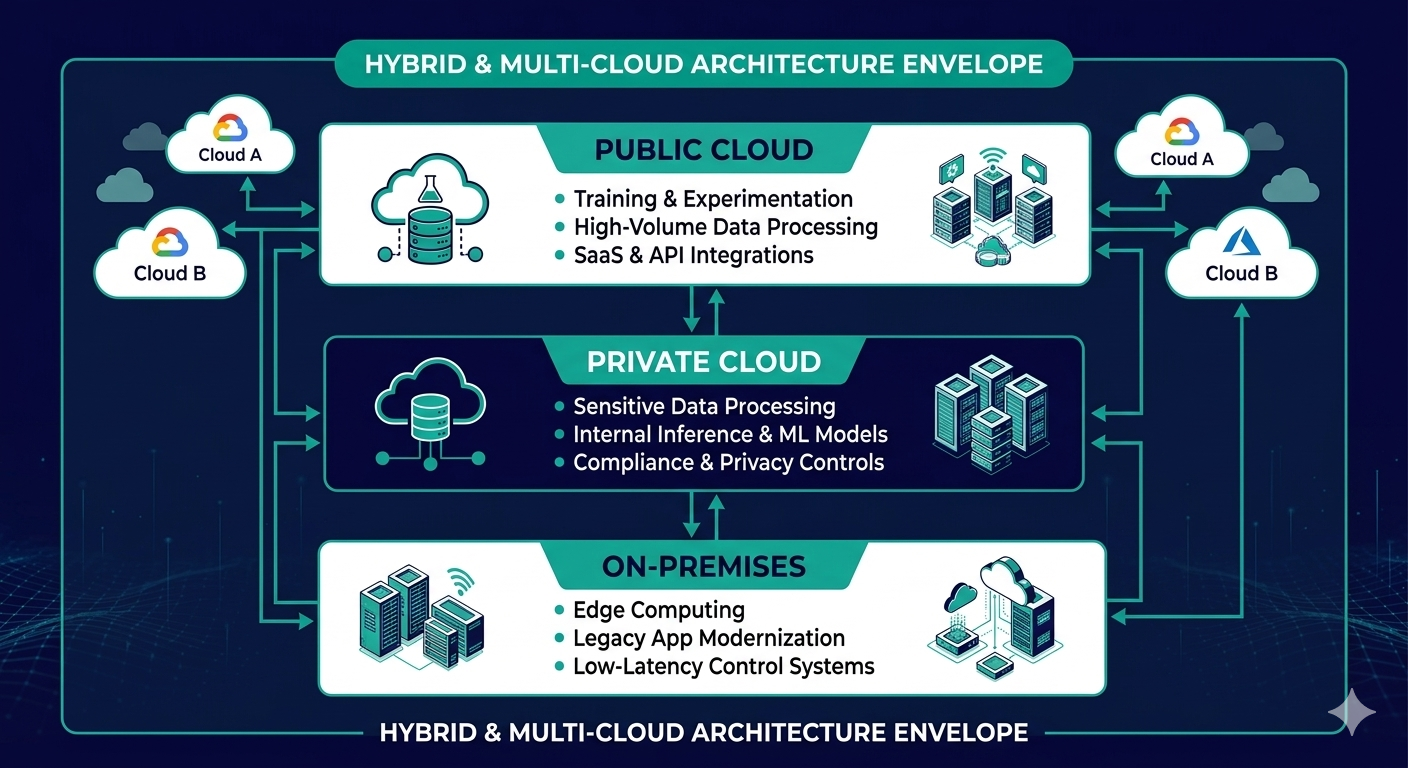
For most enterprises, this now means operating across multiple environments simultaneously:
Multi Cloud Architecture
Using two or more public cloud providers (AWS, Azure, GCP) to avoid vendor lock-in, access best-in-class services, or meet regional requirements.
Hybrid Cloud Strategy
Combining public cloud with private or on-premises infrastructure protects sensitive workloads while maintaining flexibility for variable demand.
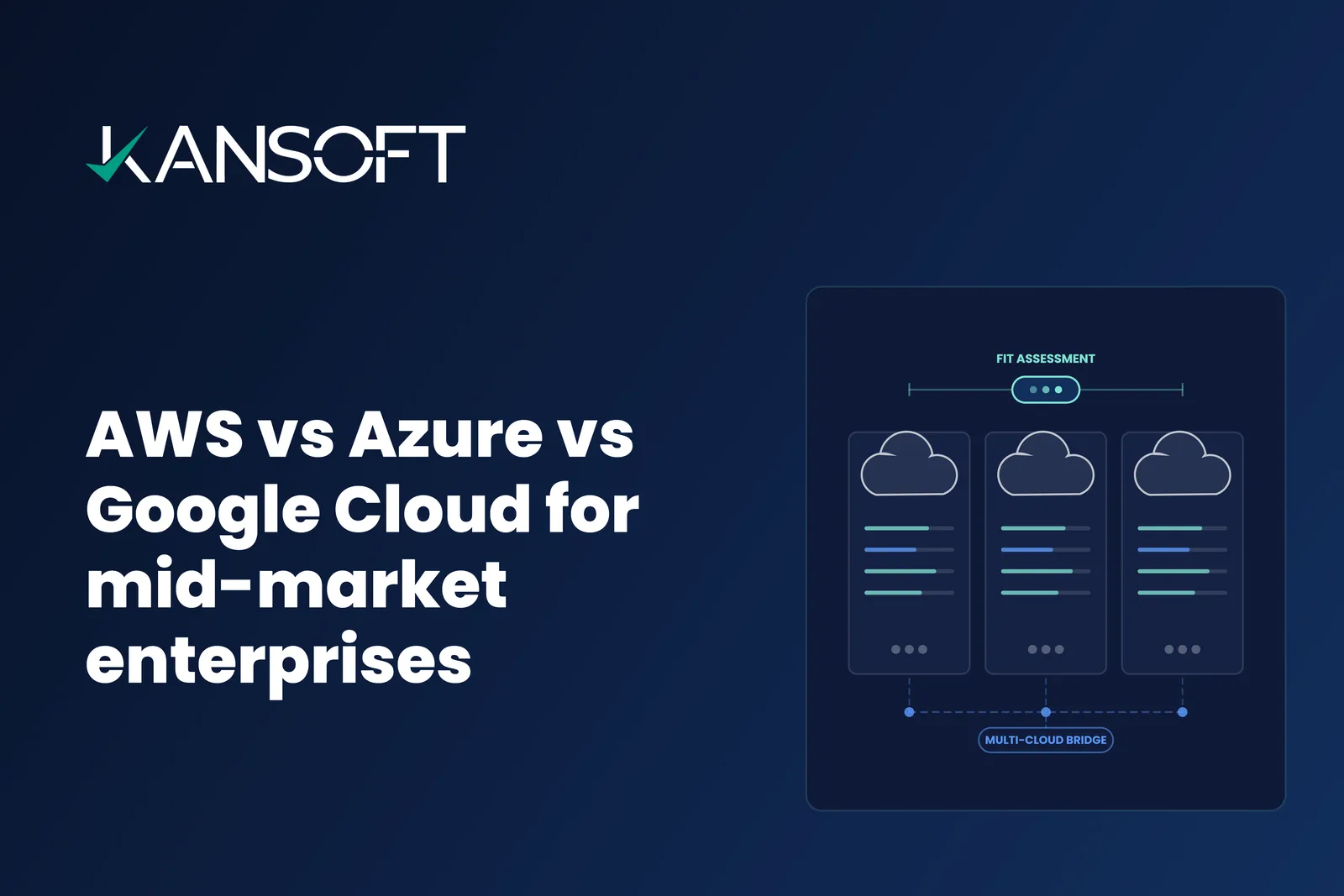
Most enterprises today are already running some version of multi-cloud architecture, even if they haven’t named it that way. If your workloads span more than one public cloud provider, or mix public cloud with any on-premises infrastructure, you’re operating a multi-cloud architecture. The question is whether it’s deliberate or inherited. That distinction determines whether it’s a strategic asset or a cost liability.
The reason these decisions matter so much right now is that AI has broken the old assumptions. Training a model and running inference are completely different costs and infrastructure problems. Agentic workloads, AI systems that take sequences of actions, are different again. One-size-fits-all cloud infrastructure routinely leads to 30–50% cost overruns precisely because organizations treat them the same.
Here’s what that actually looks like in practice and why traditional cloud infrastructure is struggling to keep up.
Why AI Workloads Break Traditional Cloud Infrastructure
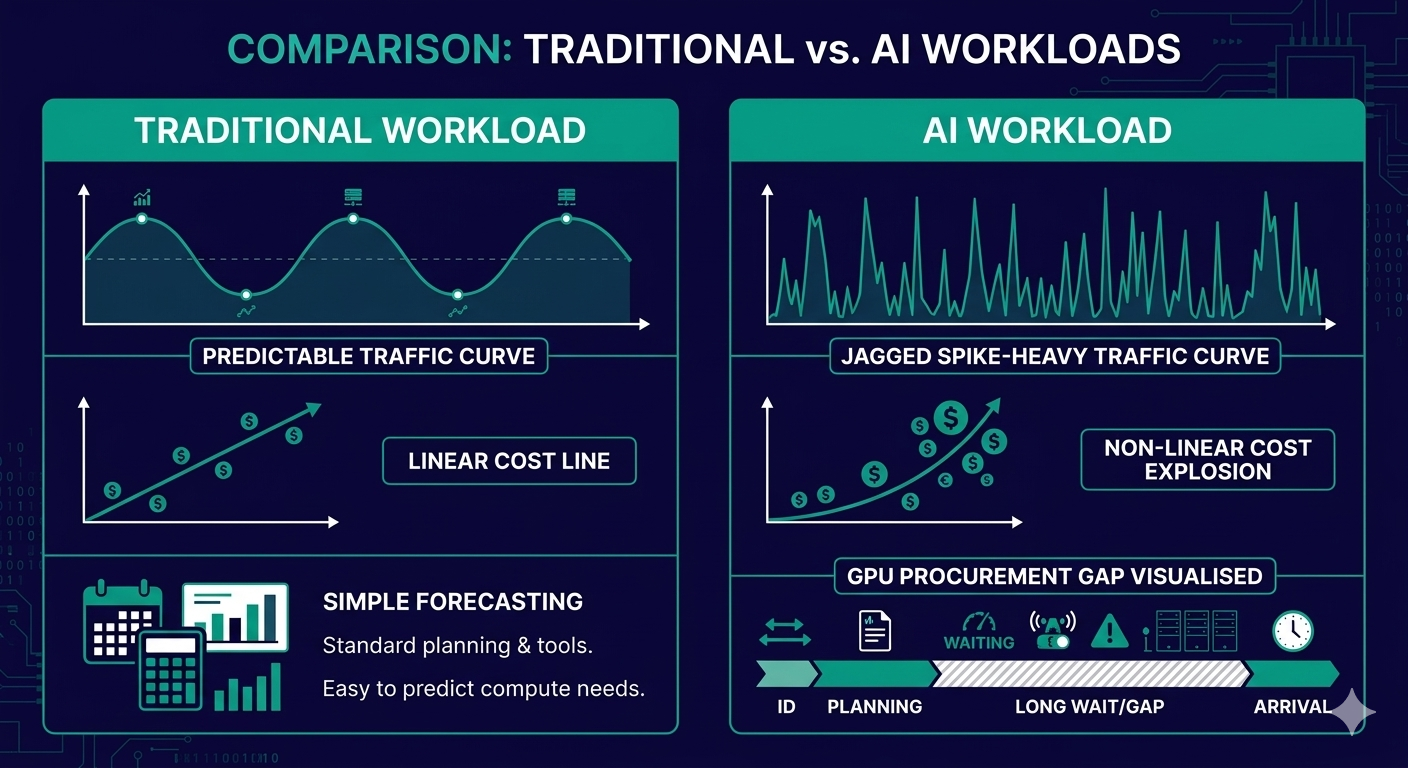
Traditional enterprise cloud architecture was built for apps with predictable traffic, and the cloud deployment models that came with it reflected that. Scale up at peak. Scale down at night. The economics were linear, the forecasting was reliable, and FinOps teams could manage spend with a decent spreadsheet.
AI infrastructure doesn’t work that way. Not even close. The mismatch creates three consequences that compound each other:
1. The costs are non-linear and nearly impossible to forecast
Training spikes, usage-driven inference, and experimentation noise create cost patterns that break every forecasting model your finance team relies on. You might budget for 1x compute and deploy to production at 4x. And supporting systems monitoring, logging, and drift detection often cost as much as the model inference itself.
2. Demand is outpacing the infrastructure market itself
Data centre vacancy rates have hit a record-low 1.9%, with more than 70% of new builds already pre-leased before completion. GPU procurement timelines are stretching beyond 24 months in some regions. This means architectural decisions you make or defer today are directly shaping your capacity position in 2027.
3. AI cloud prices are going up, not down
The era of steadily declining cloud prices is over, at least for AI-optimised compute. AWS, Google, and Azure have all made pricing adjustments. As one Forrester analyst put it, the question is no longer whether IT buyers can resist the increase; they can’t. The question is whether they can better prepare.
The result: 72% of IT and financial leaders now say their GenAI-led cloud spending has become unmanageable. That’s not an engineering problem any single cloud architect can solve in isolation. That’s a cloud computing architecture strategy problem, and it needs to be owned at the leadership level.
The 5 Cloud Deployment Model Decisions Every Cloud Architect Must Make in 2026
These aren’t theoretical. They’re the decisions we see separating the enterprises that are scaling AI profitably from those that are scaling it expensively. Each one is a cloud deployment model decision, at its core a choice about where workloads run, how data moves, and who owns the cost.
DECISION 01 · Cloud Deployment Models
Stop Defaulting to Public Cloud for Everything
Public cloud is brilliant for variable, bursty workloads experimentation, dev/test, and seasonal inference spikes. That’s exactly what it was designed for. But when GPU usage becomes continuous and predictable? The economics flip entirely.
“91% of enterprises say they are prepared to shift AI workloads off the cloud once cloud costs exceed 150% of on-premises alternatives.” — Deloitte Research Center, April 2025
The trigger point differs by organisation. But the direction is clear: cloud-only architecture for AI workloads is a transitional state, not a destination. The right cloud deployment model for stable, high-volume AI inference is rarely the same one that worked for your SaaS apps five years ago. The smart cloud cost optimisation move is knowing when to stay in public cloud and when to shift, and building the governance to make that call consistently.
DECISION 02 · Hybrid Cloud Strategy
Build a Hybrid Cloud Strategy, But Own the Governance
A hybrid cloud strategy is no longer a compromise. It’s the architecture. Almost all IT leaders 98% have already adopted or plan to adopt a hybrid IT model, according to CoreSite’s 2025 State of the Data Center report.
But here’s what most hybrid cloud guides won’t tell you: the technology decision is the easy part. The governance question is where organisations fall apart.
Specifically: who in your organisation owns the workload placement decision? In most companies, nobody is clear. Engineers send workloads where it’s convenient, with no accountability for how the multi-cloud architecture actually performs. Finance finds out six months later when the invoice lands.
“62% of enterprises now operate with a hybrid cloud or multi cloud architecture up from 55% in 2022 with another 32% planning to adopt within 12 months.” — CoreSite / Foundry 2025 State of the Data Center
That 62% figure tells you the market has already moved. The multi-cloud architecture is in place in most enterprises. The governance to make that multi-cloud architecture perform is what’s missing.
The hybrid cloud advantage only materialises when someone makes the call on where each workload runs and why. Without that ownership, you have hybrid cloud technology without a hybrid cloud strategy. And a hybrid cloud environment without a strategy is just expensive complexity with a better name.
DECISION 03 · Cloud Migration Strategy
Rebuild Your Cloud Migration Strategy Around Data Gravity
The old cloud infrastructure question was: “Can we move this app to the cloud?” The new question is: “Where does this data actually need to live?”
AI models need to be close to their data physically and logically. Latency between your model and its training data isn’t a technical nuisance; it’s a cost and performance variable that compounds at scale. And in regulated industries, financial services, healthcare, legal, data sovereignty laws in the EU, US, and UK aren’t constraints you work around later. They’re design inputs you start with.
“68% of organisations report that data residency and compliance requirements have directly altered their cloud migration strategy in the past 12 months up from 47% in 2023.” — IDC Cloud Pulse Survey, 2025
If your cloud migration strategy doesn’t have a data residency layer built in from the start, it’s already incomplete. Your AI workloads and your compliance posture will pay the price.
DECISION 04 · Cloud Infrastructure
Know When Cloud Repatriation Is the Smarter Move
This is the decision nobody wants to have. But it’s increasingly unavoidable. 69% of enterprises are now considering moving workloads from public to private cloud, and more than a third have already done so, according to Broadcom’s Private Cloud Outlook 2025.
For high-volume, continuous inference workloads with stable demand, on-premises or colocation cloud infrastructure frequently outperforms public cloud on total cost of ownership within 18–24 months. The math isn’t complicated. Most organisations simply haven’t done it yet.
The question isn’t whether repatriation is right for every workload; it clearly isn’t. The question is whether you have a framework to evaluate your cloud infrastructure options objectively, or whether you’re defaulting to public cloud out of inertia.
REAL-WORLD RESULT
From Legacy In-Plant System to Azure-Powered IoT Operations
A cement manufacturer was running a legacy in-plant system that had become expensive to maintain, manually intensive, and operationally opaque. The team had line-of-sight into very little of what was actually happening across weighment, vehicle sequencing, and plant operations.
Kansoft modernised the environment with a cloud-powered architecture on Microsoft Azure, replacing the Autoplant platform with a microservices-based system integrated with IoT across the full plant operation. The result: automated key workflows, real-time visibility into plant activities, improved system responsiveness, and a scalable foundation that the team can now build on rather than maintain around.
The lesson for cloud repatriation decisions: the question is never simply ‘cloud or not cloud.’ It’s which workloads belong where, and whether your current architecture was designed to answer that question or inherited it by default.

DECISION 05 · AI Workloads
Right-Size Your AI: Not Every Problem Needs a Frontier Model
This one is deceptively simple and wildly underused. Smaller, task-specific models often deliver comparable business outcomes at a fraction of the cost. Not every use case needs GPT-4-level compute. Not every inference needs a sub-100-ms response time.
Treating every AI workload the same is the infrastructure equivalent of sending every internal email by overnight courier. It’s a cloud computing architecture decision and a cloud cost optimisation decision simultaneously, and it belongs firmly on the CXO agenda, not just in the engineering team’s backlog.
The organisations winning on right-sizing aren’t compromising on AI quality. They’re being deliberate about which problems actually require frontier model capability and which don’t. That distinction, made consistently across a portfolio of workloads, is where meaningful cost recovery happens.
Cloud Cost Optimisation for AI Workloads: 3 Operating Principles That Actually Work
Here’s the hardest pill to swallow: cloud cost optimisation is no longer an engineering exercise. It’s a financial governance function, and it belongs at the leadership level, not in a FinOps team’s backlog.
“28–35% of enterprise cloud spend is wasted at baseline and AI workloads are making this significantly worse for organisations without clear architecture governance.” — DataStackHub Cloud Wastage Report, 2025–2026
The enterprises winning on cloud cost optimisation aren’t just running tighter FinOps processes. They’ve shifted how the organisation thinks about cloud spend entirely. Three principles separate them from everyone else:
Principle 1 — Visibility before optimisation
Only 30% of organisations know exactly where their cloud budget goes. Real cloud cost optimisation starts with attribution tying AI cloud spend back to specific teams, products, and business outcomes. If you can’t answer the CFO’s question at the quarterly review, attribution is your first problem to solve, not your last.
Principle 2 — Separate R&D and production budgets
Experimental AI workloads and production inference have completely different cost profiles, failure modes, and governance needs. Treating them as one line item in your cloud computing architecture makes it impossible to govern either. Separating them at the budget level and the cloud infrastructure level is one of the highest-leverage changes an organisation can make. Different cloud deployment models may be appropriate for each: a flexible public cloud environment for R&D, a governed private or hybrid environment for production inference.
Principle 3 — FinOps as governance, not cleanup
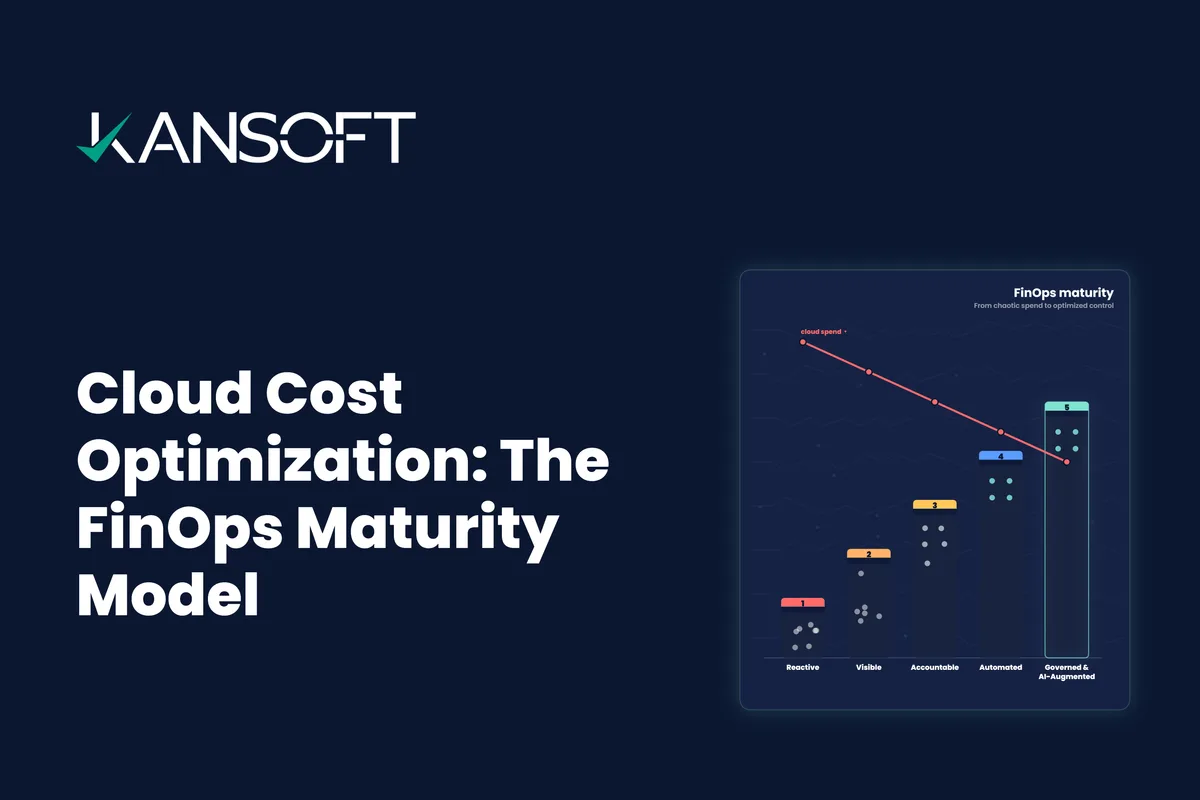
When engineers see the financial weight of their cloud architecture choices in real time, behaviour changes. FinOps isn’t about finding waste after the fact; it’s built into the decision at the source. That shift, from reactive to embedded, is what separates the organisations controlling their cloud costs from those chasing them.
This is precisely where Kansoft’s Cloud & Platform Engineering practice engages, combining strategic consulting with hands-on engineering execution, so cloud cost optimisation decisions actually translate into working architecture changes, not just strategy decks. Whether that means redesigning your cloud infrastructure, rationalising your multi-cloud architecture, or implementing FinOps governance from the ground up, we’ve done it across healthcare, manufacturing, logistics, and fintech, with global delivery across Europe, the US, and Asia.
The Cost of Delay Is Compounding, Here’s Why 2026 Is the Inflection Point
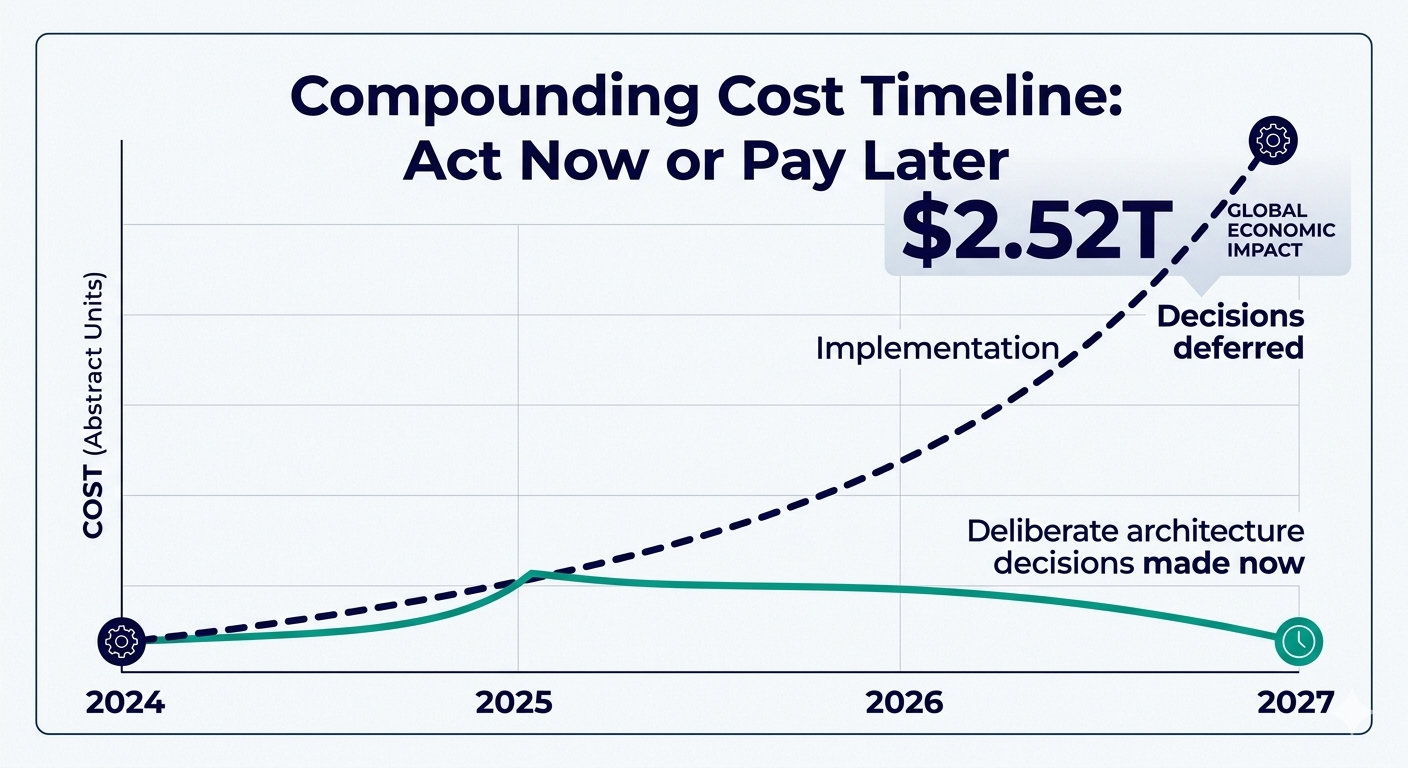
Every quarter you defer these five decisions is a quarter your cloud bill grows while your AI ROI stays flat. It’s not a linear cost; it’s compounding. The organizations making deliberate cloud computing architecture decisions today, including how their multi-cloud architecture is governed and which workloads sit where, are pulling ahead in three ways simultaneously: faster AI deployment, lower cost of goods sold, and more profitable products.
“$2.52 Trillion – Total worldwide AI spending forecast for 2026. The question isn’t adoption anymore, it’s whether you can scale AI profitably.” — Gartner / AppVerticals AI Cost Report, 2026
Kansoft has worked alongside CTOs and CIOs carrying exactly this pressure, AI mandates, ballooning cloud bills, and boards expecting both innovation and margin discipline. We don’t hand over a framework and leave. We work through the decisions with you and build the architecture that follows.
The companies still standing when margins matter again won’t be the ones who spent the most. They’ll be the ones who decide first.
The companies that treat cloud computing architecture as a strategic AI decision, not an IT configuration choice, will be the ones still standing when margins matter again.
If you’re ready to make these five decisions with a team that’s done it before, let’s start.