In our previous article, we explored why Infrastructure as Code (IaC) has become a foundational pillar of modern cloud strategy. We discussed how Terraform transforms infrastructure from a manual, fragmented process into something repeatable, governed, and aligned with Terraform best practices.
But adopting Terraform is not the same as operationalizing it.
Many organizations begin their IaC journey with optimism. A DevOps team introduces Terraform. Infrastructure provisioning becomes automated. Environments can be recreated quickly. The early wins are tangible.
Then the scale arrives.
New teams begin contributing code. Environments multiply. Compliance requirements tighten. Applications span regions. Kubernetes clusters expand. SaaS integrations grow. Cloud cost visibility becomes a board-level concern.
Suddenly, what started as automation becomes architecture.
Operationalizing Terraform is the shift from “using IaC” to running an infrastructure platform built on Terraform Enterprise architecture.
And that distinction determines whether Terraform becomes a strategic advantage or another layer of complexity.
The Maturity Curve of Infrastructure as Code
Organizations typically move through four phases in their Terraform journey and infrastructure as code maturity model:
Phase 1: Experimental Automation
A small team introduces Terraform for basic provisioning. Scripts are written quickly to solve immediate needs.
Phase 2: Expanding Usage
More infrastructure components move into Terraform. Multiple environments are codified. Some reusable Terraform modules emerge.
Phase 3: Governance Pressure
Security teams ask for audit trails. Finance demands cost transparency. Leadership requires standardized deployment processes. Drift becomes noticeable.
Phase 4: Platform Thinking
Terraform is no longer treated as tooling. It becomes the foundation of an internal cloud platform built on Terraform enterprise architecture, with defined standards, module libraries, policy enforcement, CI/CD integration, and governance workflows.
Many organizations stall between Phase 2 and Phase 3.
They automate provisioning but fail to implement structure. As complexity grows, so does risk.
The organizations that succeed move deliberately toward Phase 4 by investing in Terraform enterprise architecture and Terraform enterprise reference architecture design.
The Difference Between Terraform Scripts and Terraform Architecture
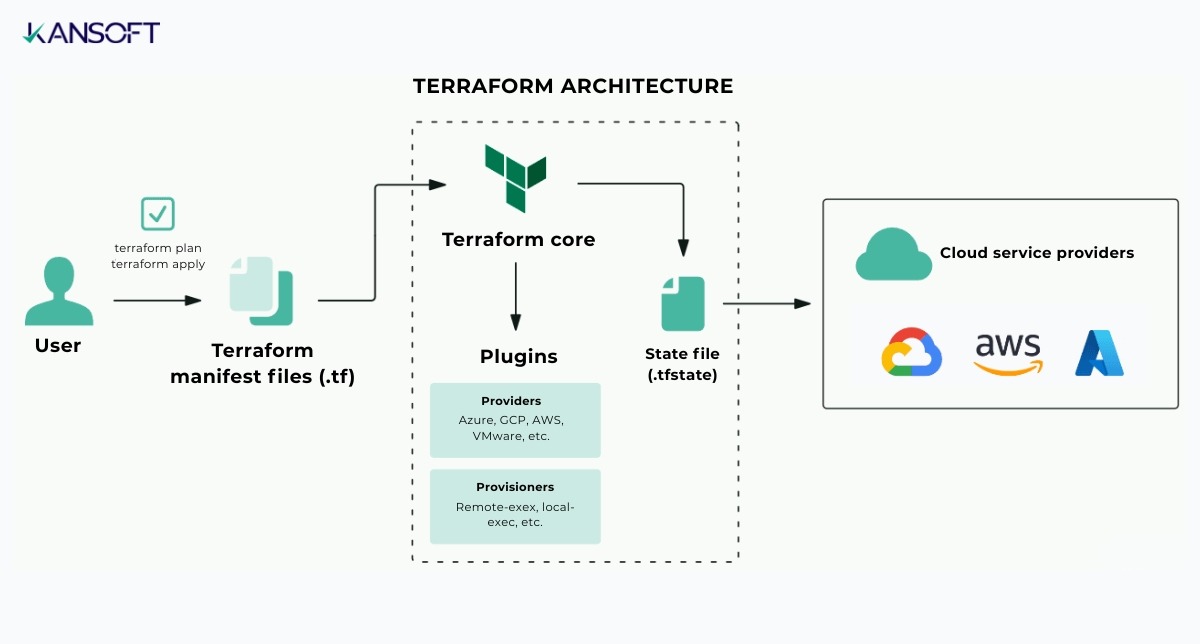
Writing Terraform code provisions resources.
Designing Terraform architecture governs infrastructure.
A script-focused approach answers:
“How do we create this resource?”
An architecture-focused approach answers:
“How do we ensure every resource across the enterprise follows standards, security baselines, cost governance rules, and deployment workflows defined by Terraform Enterprise Architecture?”
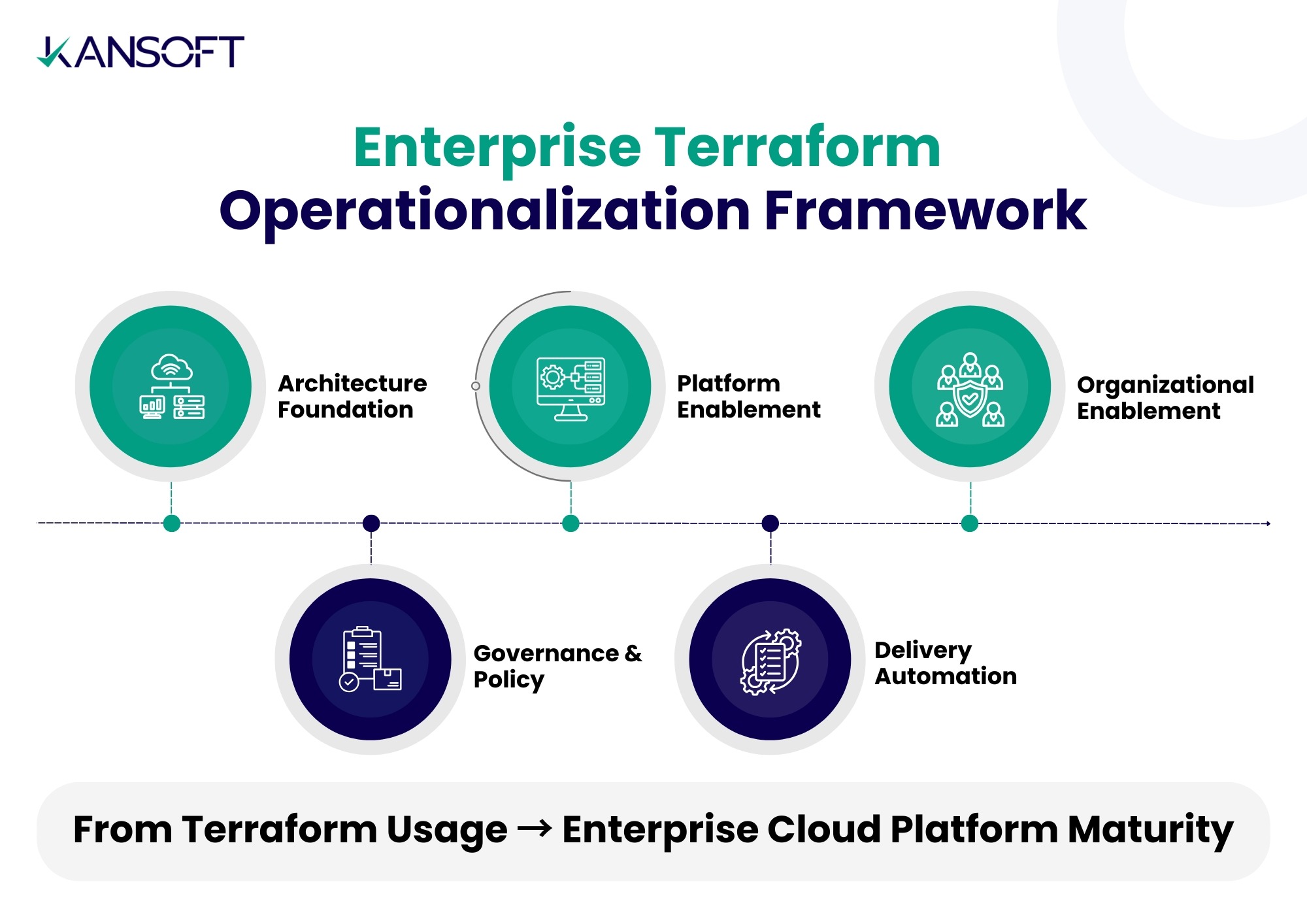
Enterprise Terraform operationalization requires:
- Clear environment separation strategy
- Defined module ownership and versioning
- State management architecture
- Policy enforcement mechanisms
- Access control boundaries
- Automated review and approval workflows
- Cost and tagging standards
- Disaster recovery strategy for infrastructure state
Without these foundations, Terraform code becomes fragmented over time.
With them, Terraform becomes an enterprise capability aligned with Terraform Enterprise best practices.
Foundational Design: Encoding Cloud Architecture into Code
Before modules are built, architectural decisions must be codified through a Terraform enterprise reference architecture.
This includes defining:
- Account or subscription structure
- Networking topology and segmentation
- Identity and access patterns
- Region strategy and failover design
- Shared services model
- Security baselines
Terraform should not simply deploy infrastructure.
It should encode architectural intent using Terraform enterprise architecture principles.
For example, if your organization requires encryption by default, Terraform modules should enforce it automatically.
If governance requires specific tagging standards, those tags should be embedded into reusable modules.
If certain workloads must remain isolated for compliance, that isolation should be structurally enforced in code.
This transforms Terraform from automation into architecture enforcement.
Modular Design at Enterprise Scale
Modules are the backbone of scalable Terraform at scale implementations.
A mature module strategy includes:
- Separation between core foundational modules and workload-specific modules
- Version control discipline
- Backward compatibility considerations
- Clear documentation
- Defined ownership models
- Automated testing
Without version control discipline, organizations face breaking changes across environments.
Without documentation, modules become opaque.
Without ownership, modules drift.
A properly designed Terraform module ecosystem enables:
- Faster onboarding of new teams
- Reduced duplication of infrastructure logic
- Consistent security posture
- Predictable deployment patterns
Modules are not simply reusable code blocks. They are standardized building blocks of your Terraform enterprise architecture platform.
State Management: The Hidden Backbone of Terraform
Terraform state is often overlooked until it becomes a problem.
State files represent the source of truth for deployed infrastructure and the operational core of Terraform Enterprise Architecture.
Enterprise-grade Terraform requires:
- Remote state storage
- Encryption at rest
- Access control restrictions
- State locking mechanisms
- Backup strategies
- Environment isolation
State architecture should align with organizational structure. Production environments should have stricter state access controls than development environments.
Poor state governance leads to accidental overrides, security exposure, and inconsistent infrastructure.
Strong state governance creates operational confidence.
Integrating Terraform into CI/CD Workflows
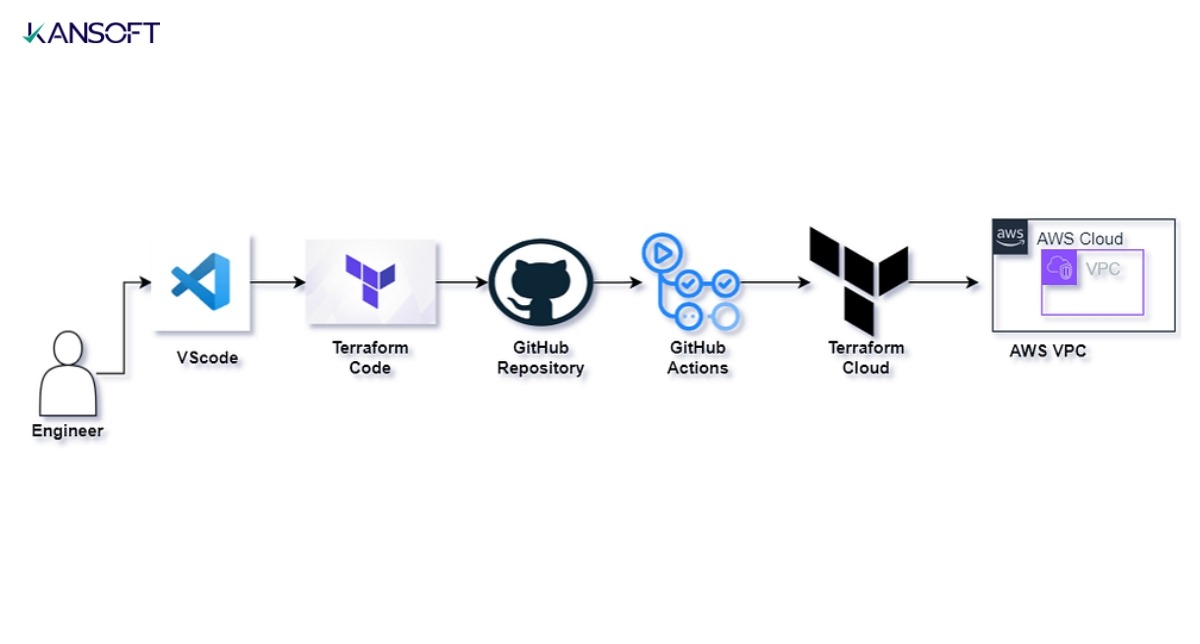
Terraform’s real power emerges when integrated into structured delivery pipelines that support Terraform best practices and enterprise governance.
A mature workflow includes:
- Automated plan generation
- Peer review before applying
- Environment-specific pipelines
- Approval gates for production
- Role-based execution controls
- Automated validation and linting
This introduces discipline without slowing velocity.
Infrastructure changes become traceable. Rollbacks become manageable. Approvals become structured.
Terraform then becomes part of the broader DevSecOps ecosystem.
Policy as Code: Embedding Governance into Infrastructure
As organizations mature, governance cannot rely on human oversight alone.
Terraform enables policy enforcement through integrations such as Sentinel or Open Policy Agent, strengthening terraform enterprise architecture governance.
Policy as Code allows organizations to enforce:
- Mandatory encryption
- Restricted instance types
- Tagging compliance
- Region limitations
- Network segmentation rules
- Identity restrictions
- Approved Terraform provider usage
This shifts governance from reactive audits to proactive enforcement, especially in regulated industries such as healthcare and finance.
Managing Drift and Ensuring Infrastructure Integrity
Infrastructure drift occurs when the deployed environment deviates from the declared configuration, a key risk for organizations managing Terraform at scale.
Operationalizing Terraform requires establishing drift detection processes:
- Regular plan checks
- Restricted manual console access
- Automated reconciliation processes
When Terraform remains the single source of truth, drift becomes manageable.
When manual intervention becomes common, drift becomes systemic.
Cost Governance Through Structured Infrastructure
Cloud cost control is rarely solved through dashboards alone.
It is solved through Terraform enterprise architecture design.
When infrastructure is codified:
- Resource sizes are standardized
- Unused resources are easier to detect
- Environmental sprawl is controlled
- Tagging is enforced
- Provisioning requires structured approval
Terraform enables organizations to align financial governance with infrastructure governance, particularly for scaling enterprises adopting Terraform Cloud for business environments.
Cultural and Organizational Considerations
Operationalizing Terraform is not purely technical.
It requires organizational alignment and adoption of Terraform Enterprise best practices:
- Clear ownership between platform teams and application teams
- Defined review responsibilities
- Security collaboration
- Documentation standards
- Training and enablement
Infrastructure as Code changes how teams think about infrastructure.
It shifts responsibility from ad hoc operations to structured engineering.
Organizations that invest in internal enablement see significantly higher returns from IaC adoption.
How Kansoft Enables Enterprise Terraform Maturity
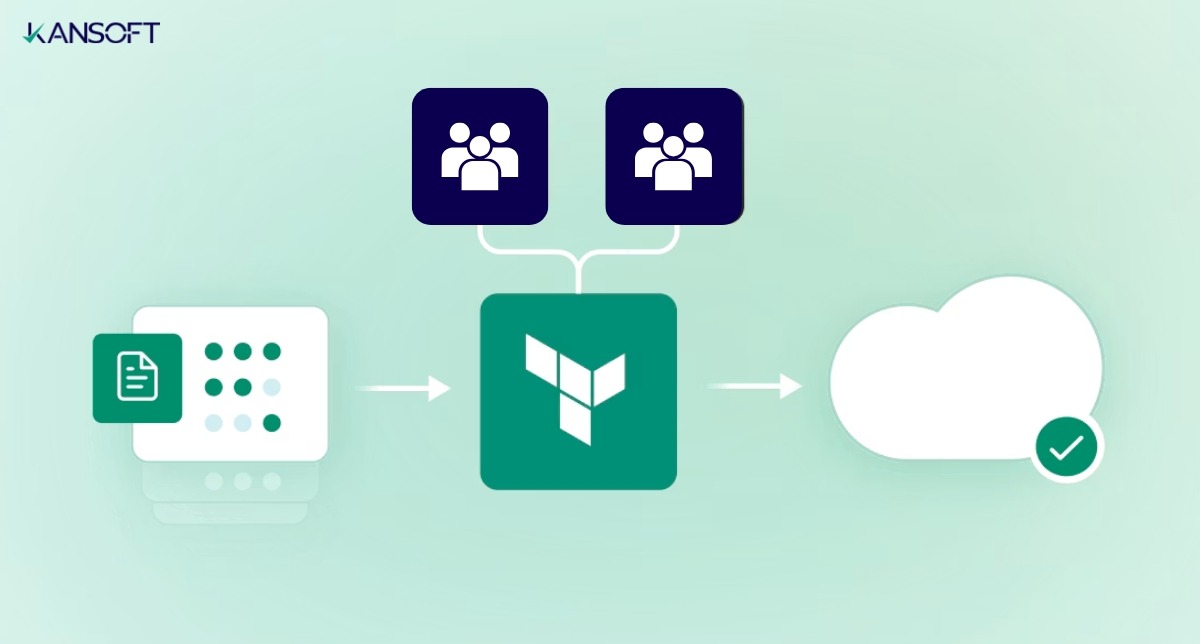
At Kansoft, we engage organizations that have either started using Terraform or are planning to scale cloud adoption significantly through Terraform enterprise architecture modernization.
Our approach focuses on long-term maturity rather than quick automation wins.
We begin with a cloud architecture assessment to understand existing governance models, environment sprawl, security baselines, and deployment workflows.
We then design a Terraform framework aligned with Terraform Enterprise Reference Architecture, including:
- Landing zone architecture
- Module library design
- State management strategy
- CI/CD integration
- Policy enforcement mechanisms
- Security embedding
- Cost governance alignment
- Documentation and handover
We help establish operational guardrails that allow teams to innovate safely within defined boundaries.
Terraform as the Backbone of Platform Engineering
As platform engineering emerges as a strategic discipline, Terraform becomes even more central to Terraform platform engineering initiatives.
Internal developer platforms rely on:
- Self-service provisioning
- Standardized infrastructure templates
- Automated compliance
- Scalable environment replication
Terraform enables these capabilities when structured correctly through enterprise-grade architecture frameworks.
From Automation to Confidence
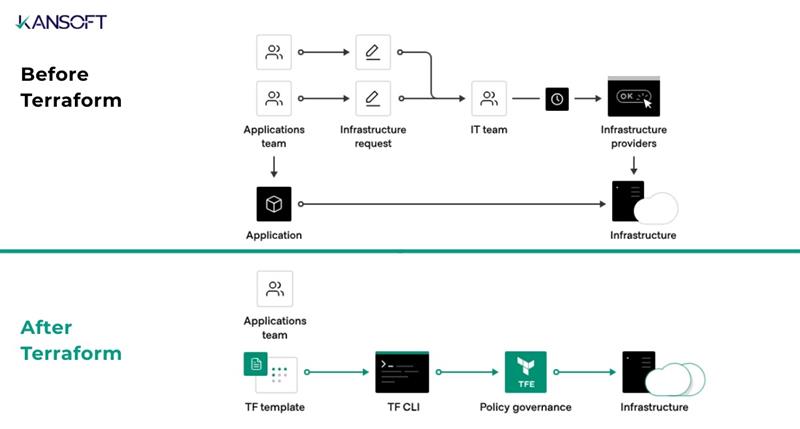
The greatest value of operationalized Terraform is not speed.
It is confidence.
Confidence that environments can be recreated reliably.
Confidence that compliance is embedded.
Confidence that costs are controlled.
Confidence that scaling will not introduce instability.
Terraform adoption marks the beginning of cloud maturity.
Terraform enterprise architecture defines its success.
Continuing the Journey
In the next article in this series, we will explore how Infrastructure as Code integrates with DevSecOps practices and platform engineering models to create secure, self-service cloud ecosystems that accelerate innovation without compromising governance.
Cloud infrastructure is no longer just infrastructure.
It is a strategic platform.
And platforms must be built deliberately, on a strong Terraform enterprise architecture foundation.