
The last decade of enterprise IT was sold on a clean narrative.
Break the monolith into microservices. Adopt a hybrid cloud strategy. Migrate the workloads. Outsource what you don’t differentiate on. The promise was faster, cheaper, more scalable — usually all three at once.
In 2026, the reality looks different. Most enterprises did the work. They migrated. They decomposed. They signed the managed services contracts. And then they found themselves with cloud bills they couldn’t predict, distributed systems no single team understood, and vendor relationships measured in tickets closed rather than business outcomes delivered.
They are not abandoning these architectures. That’s the lazy reading.
They are abandoning the assumption that adoption is the same as benefit.
The smarter enterprises — the ones quietly resetting their playbooks — have noticed something that doesn’t fit on a vendor slide: the technology was never the bottleneck. The execution model was. What follows is what we’re seeing across four of the most over-promised categories of the last cycle, starting with the one that has cost CIOs the most sleep — hybrid cloud — and what the next phase actually requires.
In this article
- Why hybrid cloud strategy is failing without cloud cost optimization
- Microservices: the default architecture that was never meant to be a default
- Cloud migration: the milestone that was sold as a destination
- Managed services: the SLA-outcome gap
- The pattern underneath all four
- The 2026 playbook for CIOs and technology leaders
Hybrid Cloud Strategy: An Operating Model Sold as a Strategy
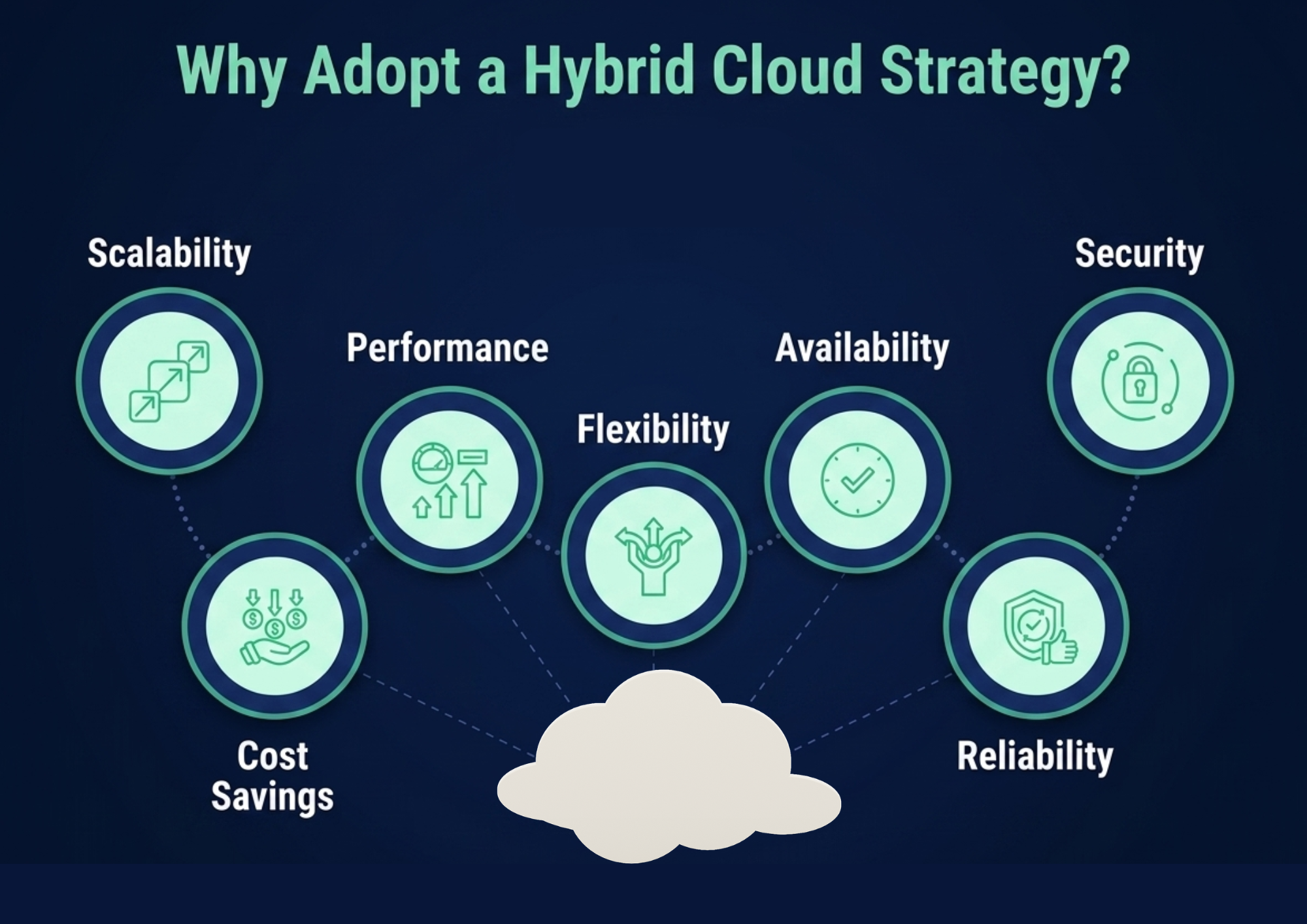
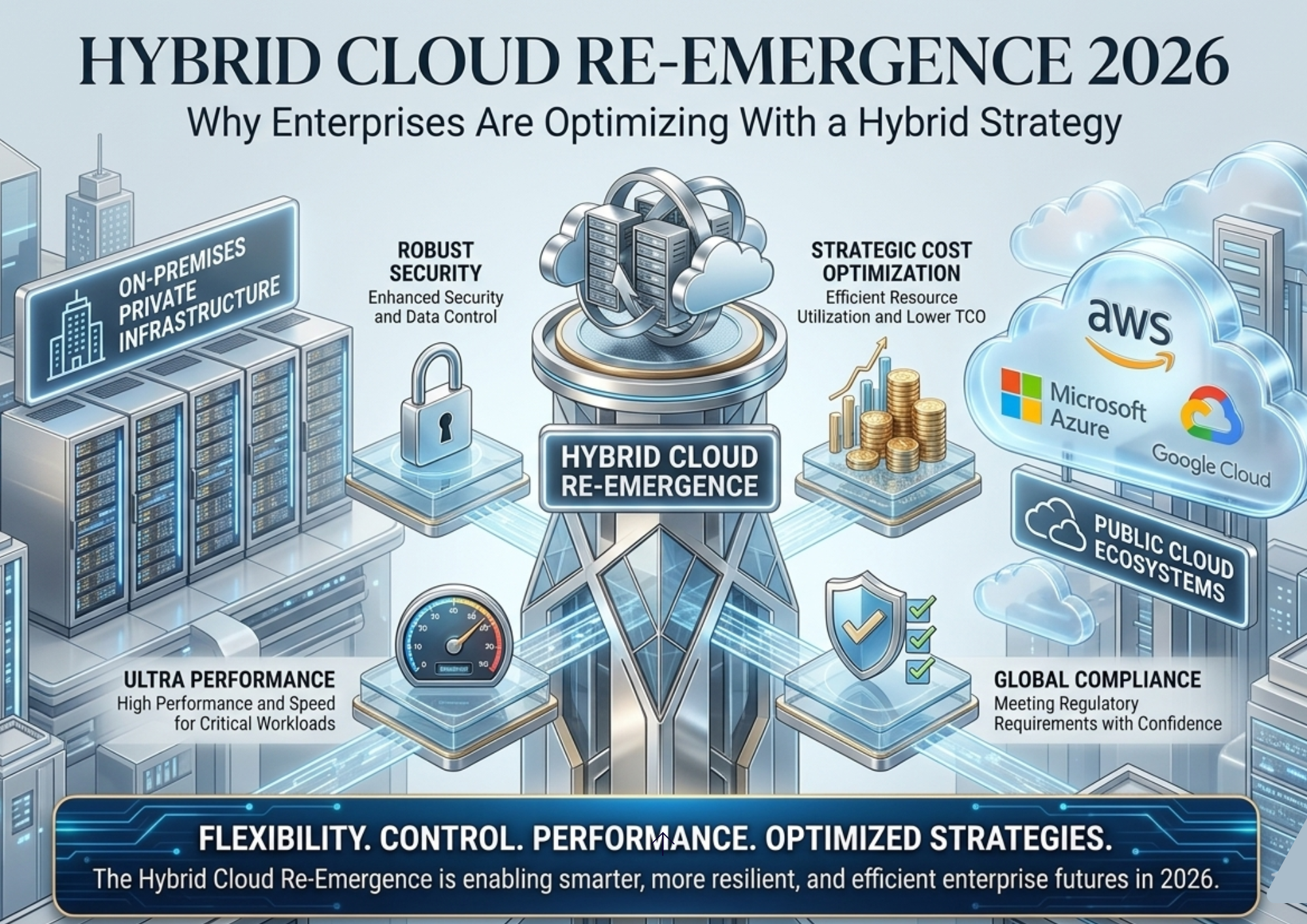
Hybrid cloud was supposed to be the mature answer to the public-versus-private debate. Keep the regulated, latency-sensitive, or cost-sensitive workloads on-premise or in private cloud. Burst the rest into AWS, Azure, or Google Cloud. Get the best of both worlds.
In practice, most CIOs ended up with the worst of three: the cost unpredictability of public cloud, the operational drag of on-premise infrastructure, and the integration complexity of managing both at once.
The architecture works. But hybrid cloud strategy without disciplined cloud cost optimization becomes a slow-bleed problem that doesn’t show up until twelve to eighteen months in — by which point reversing the decisions is itself a project.
Where hybrid cloud strategy goes wrong
The failure modes are consistent across industries. They show up wherever cloud adoption outpaces the operating model around it.
- Cloud cost visibility breaks down across environments. Finance and engineering stop speaking the same language. Bills arrive that no one can fully attribute.
- Data transfer costs and redundant infrastructure quietly erode the business case. The savings projected at the migration stage rarely materialize at scale.
- Governance and compliance become harder, not easier. Policies must hold across environments with different primitives, audit trails, and identity models.
- Vendor management overhead grows linearly with each cloud added. Two clouds is not twice the work. It’s roughly three times the work.
The flexibility argument for hybrid cloud is real. But flexibility without discipline becomes complexity. And complexity, in cloud economics, is exactly what you pay for.
Why cloud cost optimization is the real discipline
Cloud cost optimization is often treated as a finance exercise — a quarterly review where someone runs a report, finds underutilized instances, and sends a memo. That model fails for a structural reason: cloud cost is generated by engineering decisions, not finance ones.
Every architectural choice — instance type, storage tier, region, data movement pattern, observability stack — is a continuous cost decision. By the time a finance review catches the problem, the architecture has already absorbed the cost.
The enterprises getting hybrid cloud right have done three things differently:
- FinOps practice is embedded in engineering, not bolted on as a finance function. Engineers see cost data the same way they see performance data — in real time, at the workload level.
- Right-workload placement decisions are made deliberately, not accumulated by inertia. Each workload has a documented reason for being where it is, and that reason is reviewed annually.
- Cost optimization is treated as a continuous discipline, not a quarterly exercise. The cadence is weekly at the team level, monthly at the leadership level.
Hybrid cloud is not a strategy. It is an operating model. Strategies have outcomes; operating models require discipline to deliver them.
What disciplined hybrid cloud architecture looks like
In disciplined organizations, the hybrid cloud architecture documentation does not lead with technology choices. It leads with workload placement criteria — regulatory requirements, latency profiles, cost sensitivity, integration dependencies — and the technology follows.
That sequencing is the difference. Most hybrid cloud strategy documents lead with the technology stack and reverse-engineer the placement logic. The mature ones do the opposite. The result is fewer surprise costs, cleaner governance, and the kind of cost predictability that actually shows up on quarterly reviews.
Microservices: The Default Architecture That Was Never Meant to Be a Default
Microservices were positioned as the architectural endpoint of modern engineering. Decompose the monolith, ship faster, scale services independently. For a specific class of company — Netflix, Amazon, large platform businesses with deep DevOps maturity — the model is sound. For most enterprises, microservices architecture was adopted as a religion before it was understood as a trade-off.
What actually happened to microservices adoption
- Service sprawl across hundreds of APIs that nobody fully maps
- Distributed systems complexity that requires observability tooling most teams don’t have
- Operational overhead that consumes the engineering capacity microservices were supposed to free up
- Latency, debugging, and data consistency issues that didn’t exist in the monolith
The pattern is consistent: the enterprises that benefited from microservices had already built the supporting capabilities — platform engineering, advanced observability, mature CI/CD pipelines, clear service ownership. Everyone else inherited the cost without the upside.
What leading engineering teams are doing now
- Moving toward modular monoliths where the boundaries are logical rather than network-bound
- Investing in platform engineering before — not after — service decomposition
- Consolidating microservices that were created for organizational reasons rather than technical ones
Microservices are not the default architecture. They are a strategic choice that pays off only when the operating model is ready to support them.
Cloud Migration: The Milestone That Was Sold as a Destination
Cloud migration is treated, in most enterprise narratives, as a project with an endpoint. Sign the contract, lift-and-shift the workloads, celebrate the cutover. The board gets a slide. The CIO gets a checkmark.
The teams who actually run cloud workloads at scale know that the cutover is roughly 30 percent of the work. The remaining 70 percent — performance tuning, cost optimization, security posture, application modernization, integration with business workflows — happens after the migration is technically complete.
Why cloud migration success metrics mislead
- Migration KPIs measure technical execution: workloads moved, downtime avoided, timelines hit
- Business KPIs measure outcomes: cost per transaction, time-to-feature, system reliability, ROI
- These two sets of metrics rarely converge in the first eighteen months post-migration — and most programs lose executive attention well before they do
The result is a familiar pattern. Enterprise migrates. Costs initially spike. Performance is uneven. The promised benefits arrive — but only for organizations that kept investing past the cutover.
What separates cloud migration winners
- Treating migration as the start of modernization, not the end of it
- Continuous performance and cost tuning as a permanent function, not a one-time exercise
- Integration with business workflows, not just infrastructure replacement
Cloud migration does not deliver ROI. Cloud operations do. The migration is the cost of admission.
Managed Services: The SLA-Outcome Gap
Managed services were sold as a way to convert IT operations into a predictable cost line. Hand the responsibility to a vendor, get an SLA, free up internal capacity for higher-value work. For commodity infrastructure operations, the model worked.
For anything strategic, it created a structural misalignment that most enterprises only recognize three years in.
The structural misalignment in managed services
- Vendors optimize for what gets measured: uptime, ticket closure rates, response times
- Businesses care about what is harder to measure: time-to-market, innovation velocity, system adaptability
- The contract structure rewards the first set of metrics and penalizes investment in the second
The result is a vendor relationship that is technically performing — every SLA green, every report on time — while the underlying business capability stagnates. Long-term dependency becomes the silent cost. The internal team that could have built the muscle never had to.
What enterprises now expect from managed services partners
- Outcome-based engagement models tied to business KPIs, not just operational metrics
- Co-ownership of results — the vendor wins when the business wins, not just when the ticket closes
- Continuous improvement and capability transfer, so the relationship compounds value rather than locking in dependency
Managed services must evolve from support models to value creation models. Otherwise, they are just outsourced cost centers with better dashboards.
The Pattern Underneath All Four
Across hybrid cloud strategy, microservices architecture, cloud migration, and managed services, the same pattern keeps showing up:
The technology works. The operating model around it doesn’t.
Each of these architectures was adopted on the strength of a vendor narrative and a peer-pressure curve. The companies that benefited were the ones that built the operational maturity to support the technology — observability, FinOps, platform engineering, outcome-based contracting. The companies that struggled were the ones that bought the technology and assumed the maturity would follow.
It rarely does. Maturity is built. It is not procured.
This is the execution layer where Kansoft’s cloud and DevOps teams operate — embedding FinOps discipline into engineering workflows, designing workload placement frameworks before vendors are selected, and helping enterprises convert hybrid cloud architecture from a cost center into a cost-controlled operating model.
The 2026 Playbook for CIOs and Technology Leaders
If you are leading enterprise technology decisions this year, four shifts are worth making explicit.
1. Rethink architecture as a trade-off, not a trend
Not every system needs microservices. Not every workload belongs in the public cloud. The right answer depends on your team’s maturity, your domain’s regulatory load, and your business’s actual scale curve. Default to the simpler architecture; earn the more complex one.
2. Treat post-migration as the real program
Cloud ROI is built in the eighteen months after cutover, not before. Budget for it. Staff for it. Hold it to business metrics, not infrastructure ones.
3. Align IT decisions with financial outcomes
Cloud and infrastructure are no longer pure technology decisions — they are continuous financial decisions. Cloud cost optimization is not a tool. It is a discipline that has to live inside engineering.
4. Redefine what a managed services partnership means
SLAs measure the floor. Outcomes measure the ceiling. Contracts that don’t tie vendor incentives to your business KPIs will, over time, optimize against you.
What this phase of enterprise IT will be defined by
The industry is not pulling back from microservices, hybrid cloud, cloud migration, or managed services. The technologies are sound. The architectures are durable. The vendors are not going anywhere.
What is being abandoned is the assumption that adoption equals benefit — that signing the contract, hitting the milestone, or ticking the architecture box translates into business outcome. It never did. The next phase of enterprise IT will be defined by three disciplines that the last phase quietly skipped:
Operational discipline. Architectural clarity. Measurable business outcomes.
The leaders who internalize that early will spend the next three years compounding advantage. Everyone else will spend them paying down the debt of the last decade’s choices.
Frequently Asked Questions
What is hybrid cloud strategy and why is it failing for some enterprises?
Hybrid cloud strategy combines public cloud, private cloud, and on-premise infrastructure to balance flexibility, cost, and compliance. It fails when enterprises adopt the architecture without the operating discipline — particularly cloud cost optimization, FinOps practice, and clear workload placement criteria — that makes it work at scale.
What is cloud cost optimization?
Cloud cost optimization is the continuous discipline of aligning cloud spend with business value through architectural choices, workload placement, instance sizing, and FinOps practices. It is not a quarterly finance review. The enterprises that get it right embed cost visibility into engineering decisions in real time.
Are microservices still the right architecture in 2026?
Microservices remain the right architecture for organizations with the platform engineering maturity to support them — strong observability, mature CI/CD, clear service ownership. For most enterprises, modular monoliths or selective decomposition deliver more of the agility benefit with far less operational overhead.
Why do enterprises struggle to see ROI from cloud migration?
Most enterprises measure cloud migration success by technical milestones — workloads moved, downtime avoided — rather than business outcomes. The ROI is built in the eighteen months after cutover through performance tuning, cost optimization, and application modernization. Programs that stop investing at the cutover rarely see the projected returns.
What should enterprises expect from a managed services partner in 2026?
Outcome-based engagement models tied to business KPIs, not just SLA compliance. Co-ownership of results, continuous improvement, and capability transfer that compounds value rather than locking in vendor dependency. Traditional ticket-and-uptime managed services models are being replaced by partnerships that align vendor incentives with business outcomes.